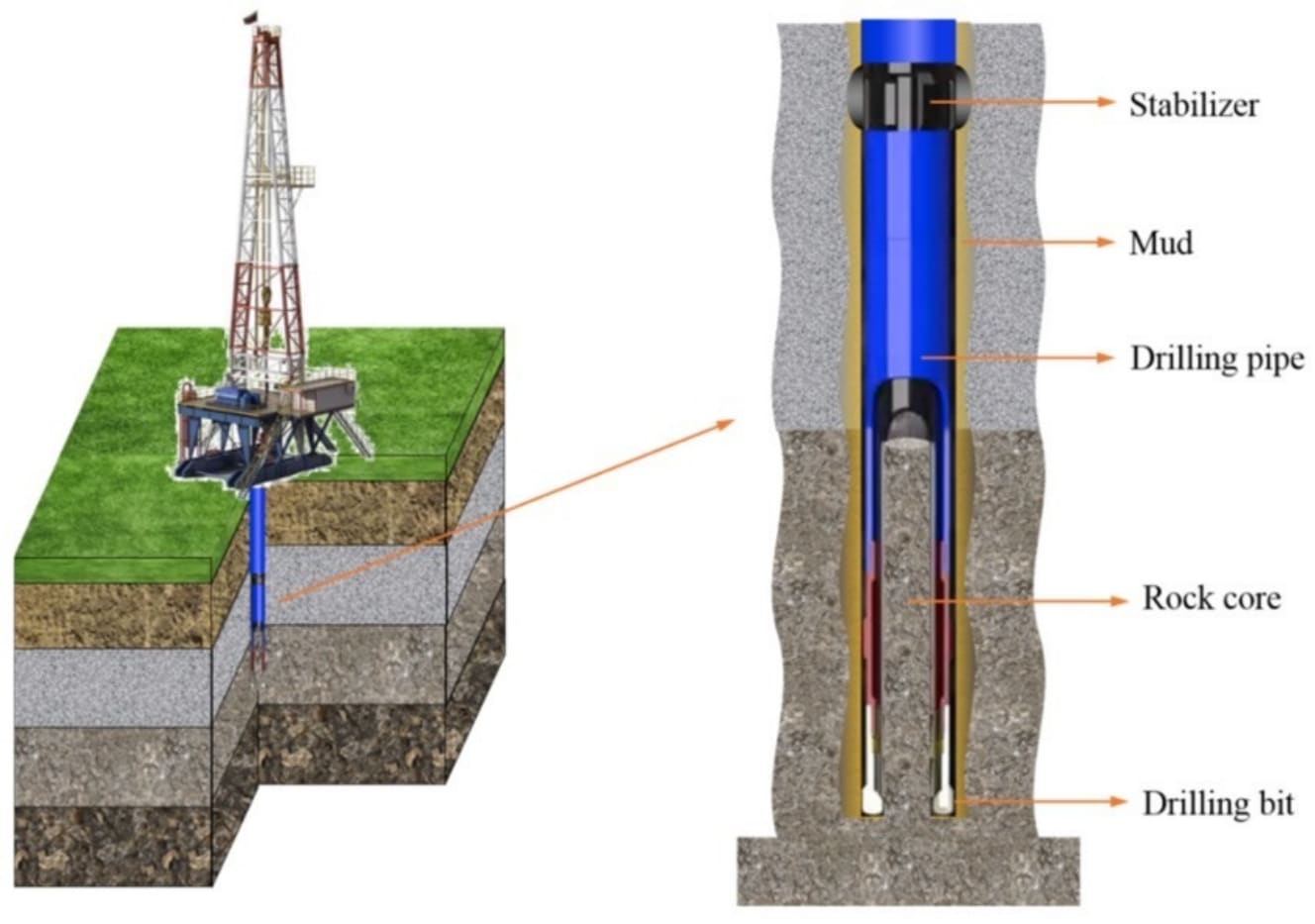





Geotechnical focus:
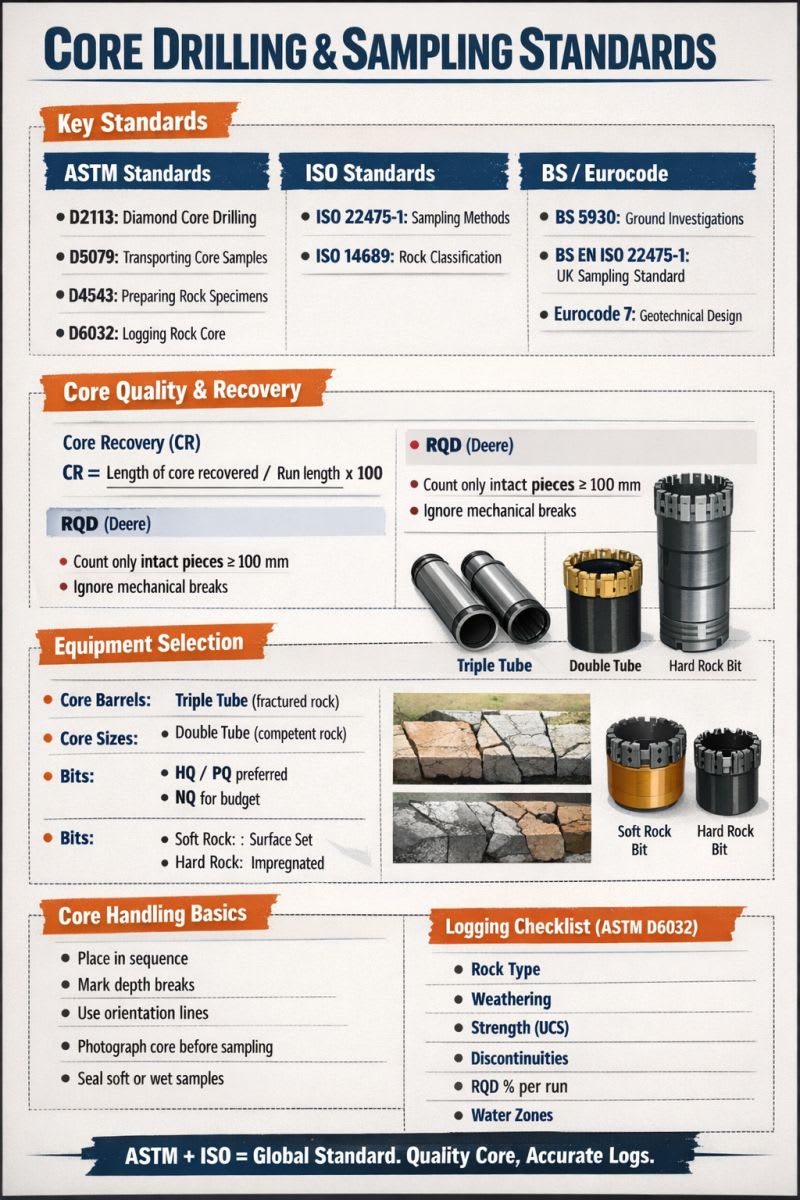
Core drilling and sampling standards are about controlling damage, not just drilling depth: correct core barrel and bit selection (HQ/NQ/T2), low-disturbance drilling parameters, full core recovery, proper orientation, and disciplined handling and boxing. Poor practice shows up immediately as low recovery, broken core, and unreliable RQD.
Mineral exploration focus:
In mineral exploration, core drilling standards aim to preserve geology and structure: appropriate barrel size, stable drilling parameters, accurate core orientation, and strict core handling and logging. Recovery quality directly affects structural interpretation, grade control, and confidence in resource models.
1️⃣ Diamond Core Drilling (HQ/NQ/BQ)
Produces intact core — the gold standard.
If you want RQD, fractures, UCS, structure, or lab tests, this is your method.
→ Best for: Tunnels, dams, slopes, deep exploration.
2️⃣ Reverse Circulation (RC) Drilling
Fast, efficient, and cost-effective. Delivers rock chips, not core.
Brilliant for quick decisions in hard rock.
→ Best for: Reconnaissance, orebody delineation, grade control.
3️⃣ Down-The-Hole (DTH) Hammer
A pneumatic hammer breaks very hard rock with ease.
High penetration, low cost, no core.
→ Best for: Hard volcanics, blasting holes, geotechnical boreholes.
4️⃣ Top Hammer / Percussive Drilling (Jackleg, Stopper, Jumbo)
High-frequency drilling where mobility matters most.
If you’ve been underground, you’ve heard it before you saw it.
→ Best for: Underground headings, stopes, tunnel blasting.
5️⃣ Rotary Air Drilling (Tri-cone Bit)
Fast and cheap. Produces cuttings only.
Love it for dry, competent rock.
→ Best for: Recon drilling, pre-collar holes, shallow investigations.
6️⃣ Rotary Mud Drilling (in Fractured Rock)
When the rock mass is weak, crushed, or sheared — mud keeps the hole open.
Not ideal for core, but perfect for stability.
→ Best for: Shear zones, faulted rock, geotechnical instrument holes.
7️⃣ Horizontal / Directional Core Drilling
When you need rock data in a specific direction — especially in tunnels or dams.
Game-changer for proactive hazard detection.
→ Best for: Tunnel face probing, slope anchors, deep foundations.
8️⃣ Sonic Drilling (Moderately Hard Rock)
Vibration-assisted advance that preserves core in weathered rock where diamond drilling struggles.
→ Best for: Rock-soil transitions, altered rock.
Core drilling is one of the most fundamental and reliable techniques in mineral exploration. It serves as a direct method of obtaining subsurface samples that provide a continuous record of the geological formations beneath the surface. The cylindrical samples, known as cores, give geologists valuable insights into the composition, texture, and structure of rocks, helping to identify and evaluate potential mineral deposits.
The process typically begins with the use of a diamond-tipped drill bit, which cuts through various layers of rock while preserving the core inside a hollow tube. These cores are then carefully extracted, logged, photographed, and analyzed in laboratories. Through this detailed examination, geologists can determine the type, grade, and distribution of minerals present — essential data for accurate resource estimation and feasibility studies.
Unlike other drilling methods, such as reverse circulation (RC) drilling, core drilling provides more detailed geological information because it maintains the integrity of the rock sample. This makes it particularly valuable for structural analysis, stratigraphic interpretation, and geotechnical assessments.
In modern exploration, core drilling rigs are equipped with advanced hydraulic and digital control systems that allow for greater depth accuracy, improved safety, and better data acquisition. Furthermore, precise core orientation techniques enable geologists to understand the true position of geological structures, such as faults, folds, and veins, which are critical in mine design and planning.
It is also worth emphasizing that core handling and preservation are key aspects of successful exploration. Improper labeling, contamination, or poor storage can lead to data loss and misinterpretation. Therefore, maintaining a standardized core logging and storage procedure is essential for ensuring data reliability.
Source: Adapted from Atlas Copco Drilling Techniques for Mining Exploration (2002) and SME Mining Engineering Handbook (3rd Edition)
Key Performance Indicators (KPIs) for Optimisation of Drilling & Blasting operation in Opencast Mines
1. Technical KPIs
Monitor powder factor optimization
Track fragmentation size distribution
Measure blast-induced damage levels
Assess drilling accuracy and precision
Evaluate explosive utilization efficiency
Monitor equipment productivity rates
2. Safety and Environmental KPIs
Track safety incident rates
Monitor vibration and noise compliance
Assess air quality impact levels
Measure flyrock occurrence frequency
Document environmental compliance status
Record community feedback and concerns
Key performance indicators (KPIs) for optimization of drilling and blasting include *
*Rate of Penetration (ROP) **
, Powder Factor,
Rock Fragmentation
, Equipment Utilization
Cycle Time of Shovel
Throughput of Crushers
, Drilling and Blasting Costs,
Ground Vibration,
Bit Life, and
Safety Incidents.
These KPIs provide quantifiable measures to evaluate drilling effectiveness, blast performance, operational efficiency, and safety, facilitating continuous improvement and alignment with overall mine goals.
Drilling Performance KPIs
Rate of Penetration (ROP): Measures the speed at which the drilling unit can penetrate the rock.
Penetration Rate (Depth per Hour): Assesses the productivity of the drilling unit over time.
Bit Life: Tracks the durability and performance of drill bits.
Equipment Utilization: Measures the effective working hours of drilling units against their total working hours.
Drilling Costs per Foot: Evaluates the cost-effectiveness of drilling operations.
Blasting Performance KPIs
Powder Factor: The amount of explosive used per volume of rock blasted, used to optimize blast design.
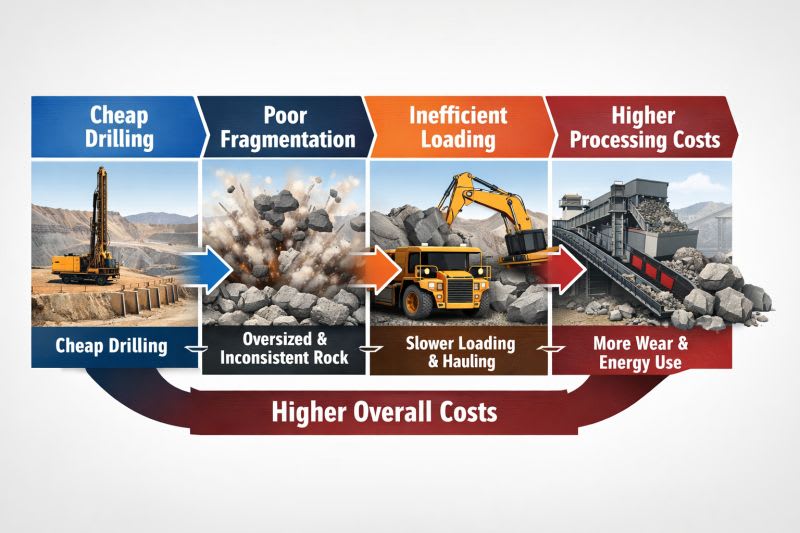
Rock Fragmentation: The size distribution of the blasted rock, a critical factor for downstream processes like crushing and milling.
Flyrock: Measures the distance and potential danger of rocks thrown from the blast site.
Back Break: Indicates the extent of rock damage beyond the intended blast perimeter.
Air-Overpressure (AOp): Measures the force of the air blast, which can impact surrounding areas.
Safety & Environmental KPIs
Ground Vibration: Tracks the level of ground shaking caused by the blast, which is critical for maintaining structural integrity and minimizing environmental impact.
Safety Incidents: The number of safety-related incidents during drilling and blasting operations.
Overall Operational KPIs
Cycle Time Optimization: Focuses on reducing the overall time taken for drilling and blasting cycles.
Volume Blasted: Measures the total volume of rock successfully blasted within a given period.
Energy and Environmental Metrics: Includes energy consumption and other environmental impacts to ensure sustainable operations.
Reverse Circulation (RC) Drilling Rig: is a widely used technique and quick drilling method used in mineral exploration and method of testing the size, grade, and geology of mineral deposits before mining starts, where compressed air is used to push rock cuttings through the inner tubes of drill rods to the surface. This allows for the collection of fine rock samples for analysis and providing geological information at regular intervals .
RC Rig Functions:
Drilling:
Dual-tube drill rods (inner and outer) are pushed into the ground.
Air Delivery:
Compressed air is pumped down through the space between the tubes.
Cuttings Ejection:
Compressed air rises, carrying rock cuttings (from drilling) through the inner tube of the drill rods.
Sample Collection:
Rock cuttings are separated from the air via a cyclone system, and samples are collected for analysis.
RC Rig Components:
Dual-tube drill rods: These are the tubes that descend into the drilling rig.
Drill Hammer: This is the tool that breaks up the rock.
Drill bit : Typically made from hardened steel or tungsten carbide, designed to crush and break rock.
Air Pump: Provides the compressed air needed to propel the rock cuttings.
Cyclone System: Separates the rock cuttings from the air.
The importance of reverse circulation drilling (RC rig):
Sample extraction:
Fine samples of rock can be extracted for analysis.
Mineral locating:
Samples can be used to locate minerals such as gold and other metals.
Deep penetration: can reach significant depths, enhancing exploration capabilities.
Reverse circulation drilling:
Air is sent through the space between the tubes and forces rock pieces through the inner tube.
The most important informations we should collect while working on the rigs are :
- quick description of ( lithology, alteration, associated minerals appearance ).
- starts and ends of our expected mineralised zones approximately.
- split and prepare samples and its weight .
- Resource Assessment : Aids in quantifying mineral resources estimation.
- faster drilling rates: general quicker than diamond drilling, making it cost-effective for exploration.
Note : The drilling rate different by the rock unites and its hardness.
In short, an RC rig is an effective tool in mineral exploration, as it allows accurate rock samples to be extracted and analyzed and faster and more economical and less cost than other drilling methods .
Doing a detailed review of underground stope drill and blast performance can easily identify the main factors behind stope performances against designs. It is critical to review both technical and operational drill & blast aspects, identify issues and provide recommendations however it's more better to implement the recommendations to see improvements in the stope recovery.
Below is a detailed stope drill and blast review I did and the summary and recommendations provided. Simple things that add up to an overall stope performance.
________________________________________________________________________
SUMMARY:
• From the reviews done so far there is minimal to no issues identified in the technical design perspective in terms of drill and blast design parameters.
• Void ratio was tight with 0.955 against site specific 0.95 after applying 30% swell factor.
• From the LPU data, 5 slot holes were significantly undercharged. Prep returns & Simba cleanout plods show that these holes were prepped. There is possibility of slot bridge or significant slot underbreak expected as we do not have a breakthrough void yet at this stage.
• Logger data and charge returns show that the correct number of dets were charged with correct delays assigned and correct number of primers charged as per the plan. There is no return to show that the primers were staggered as per the charge plan.
• Total of 15.7t emulsion used. 14.8t emulsion charged into blast holes against a design of 14.2t.
RECOMMENDATIONS:
1. D&B Engineers to check new void ratio using the CMS after undercuts taken to see if the downhole shot will be accommodated by the usable voids available.
2. D&B Engineers to notify slot location and the slot holes to the charge crews and stick to the approved charge plan.
3. Charge crews must be aware of how critical the slot is and notify engineers of any issues confronted during charging and assigning delays to the slot holes. This also includes other blast holes.
4. D&B Engineers to check LPU Data to make sure charging was done according to the charge plan issued.
5. LPU Operator to use LPU Hole ID same as Design Hole ID during charging to make it easier to compare ascharged LPU data against design data.
6. Shots greater than 20m height to be left for at least 3 hours (3hrs to confirm?) after charging to allow gasing of emulsion to the designed uncharged collars.
7. D&B Engineers to maintain reviewing of prep returns prior to finalizing charge plans.
For so many drill and blast professionals, its not the "Drill & Blast" department but rather the "Drill & Blame" department. Where "no news is good news".
If there is poor dig or other issues you have half the minesite pointing fingers and making noise. When the blast works well its crickets, while patting the production team on the back for nailing dig productivity.
A shoutout for the career professionals that stick with it, that are passionate about D&B and know how much goes into getting it right. And praise to the managers who recognise the importance of good D&B; ensuring their D&B professionals are enabled to success, while being recognised for the good blasts and learning from those that need improvement.
What have you seen work well to fix the blame culture, to retain our good people and achieve great D&B ?
Hablemos de una confusión GIGANTE que escucho muy seguido en la minería, algo tan básico que se dan por sentado...
Muchos —y te sorprendería cuántos— cree que esa herramienta, cuando la paras a cierta profundidad,
toma su medición exactamente donde esta la camara, pero
realmente es asi?
Imagina que, metes un lápiz rígido y cortito dentro del barreno. Esa herramienta de survey o medición es ese lápiz en ese pedacito de hoyo y el borrador es la camara.
Lo que hace la herramienta (el lápiz) en cada lugar donde la detienes, es medir la DIRECCIÓN a la que está apuntando ese lápiz en ese punto
Te dice dos cosas clave:
1.- Qué tan inclinado está ese lápiz hacia abajo (eso es la famosa Inclinación).
2.- Hacia dónde apunta ese lápiz en el mapa (eso es el Azimut, la dirección horizontal).
O sea, te da la DIRECCIÓN del barreno en ese punto,
Y aquí viene la clave que quiero que te lleves hoy (y que confunde mucho):
Si la herramienta (el lápiz rígido) tiene un tamaño, digamos de 1 o 2 metros…
¿Importa si el sensor que "lee" la dirección (el borrado del lápiz) está al principio, en medio o al final de ese lápiz?
¿Cambia la medición si el sensor está 30 centímetros más arriba o más abajo dentro de la misma herramienta?
¡Para medir la dirección de ese lápiz, NO importa ni tantito!
La herramienta es ese objeto rígido que se alinea con ese tramo corto de barreno. Lo que mide es la dirección de TODO ese tramo.
No es un truco de magia ni geometría de otro planeta. Es la simple verdad: un objeto recto apunta en una dirección, y esa dirección es la misma en todos sus puntos.
Entender esto — que la ubicación interna del sensor no cambia esa lectura direccional—
es el primer escalón fundamental. Es como aprender el ABC del survey (trayectoria de barrenos, mediciones, ect, fotos, shots).
Por ahora, quédate con esto: En cada parada, mide la DIRECCIÓN de un pedacito de hoyo (con ángulos).
Entender esto no es solo un detalle técnico.
Es lo que separa un modelo geológico preciso… de una interpretación equivocada que cuesta millones.
No midas puntos.
Mide direcciones. Piensa en segmentos. Modela con intención.
¿Ya lo aplicas así en tus proyectos? ¿O todavía hay dudas en tu equipo?
Drill and blast performance was always hot topic in decades past at underground mines. Today it feels like it has gone out of fashion somewhat, with efficiency KPI’s becoming the focus, especially in BI circles. Are we forgetting just how impactful 1% of overbreak can be in an underground stoping mine?
I get it… why chase 1% less overbreak when an improvement consultant has dangled promises of 10% efficiency gains in front of your face? I’ll save the discussion about these slated efficiency gains for another article, but lets really look at what 1% overbreak or underbreak means for a typical stoping operation in 2025.
While very hard to define an “average size UG operation” we’ll use for simplicity’s sake one with a yearly revenue of $500M. It’s pretty obvious that for every 1% underbreak, $5M is potentially lost, assuming it is never recovered (sterilised). It’s not that simple of course, but lets leave it there as a bit of a yard stick. 10-15% underbreak would not be considered an uncommon result for an operation mining stopes in the 10kt-100kt range, so we are talking about a lot of lost opportunity here, considering everything has already been spent to access and break the dirt.
Overbreak is far more complex to work out the cost of, though it can lead to far worse results than underbreak which has a more direct correlation to loss. For example, over breaking into ore of a comparable quality results a gain right? Well, maybe… Your average grade will be maintained in this instance, as long as you can restrict overbreak to the stope walls with ore contacts, a rarity. The flip side is overbreaking into waste, which can hit doubly hard. The old mantra of “Ore + Waste = More Ore” has some holes when we look at the costs associated.
In a mine which is production constrained (constrained by fleet capacity) every tonne of waste overbreak you bring up displaces a tonne of ore. This waste tonne then incurs the cost of haulage, grinding, separation and then takes up space in your tailings dam. In addition, as overbreak starts to artificially increase the amount of tonnes removed from the stope, delays to the sequence start to incur, which can range from un-impactful right through to a real pain in the date! Finally, overbreak leads to larger spans (Hydraulic Radii), and in some cases stope failure. Rarely will this be without impact and in the worst cases, this can destroy the value of a mining front.
What could this potential overbreak cost be? We lets say you are operating at a 20% (EBITDA) margin and your overbreak goes from a well controlled 10% to a slightly less controlled 15%. At 10% overbreak, your entire margin comes from the last 18% of the ore you mine. Once you add an additional 5% waste overbreak to this number and displace that metal from your year, margins drops disproportionately to 14.4%. This means you have effectively given up 27% of your free cashflow! Remember, total material mined for the year stays the same in this example, you have simply diluted the year's average grade by mining extra waste instead of panned ore. While this is a simplified example using the basic accounting skills of a mining engineer, it illustrates the point...
I’m preaching to the choir here if you are a professional underground drill and blast engineer. The issue in 2025 is that less and less of us are. Instead, engineers take a faster track to a senior role, with great tools making up for lack of learnt expertise (a common theme in my articles). The blame in my opinion does not sit with them however.
Engineers will take an interest in whatever the industry holds in high regard. Our senior leadership in the mining space sets the standard, not the engineer in the seat. If D&B KPI’s are rarely discussed, the team is under-resourced, the reward is comparatively low and there is a lack of great coaching, then it makes sense the role will be seen as a stepping onto “more important things”.
I believe great D&B expertise is the foundation of every great planning engineer. Furthermore, having the D&B nous to solve stoping challenges and unlock opportunities in a mine schedule, will take a scheduler from good to great. Thankfully, drill and blast is a well understood art, and there are many amazing engineers out there who can coach our newer generation on the fundamentals. We just need tech services and mining managers/superintendents to set a higher standard and provide the resources to coach our newer generations.
There are some fantastic companies and resources out there who do exactly this, and you can add Strategic Mine Planning Services to that list. If you would like help to elevate the game of your D&B team quickly and sustainably, please reach out. We love coaching our newer generation and seeing the fast results that come with it for the operations that invest in their people.
FREE OFFER! If you would like me to walk you through a case study where average overbreak and underbreak were reduced by almost 5% each, message me and lets line up a chat. It'll cost you nothing and you might get some real value from it.
Source: Credit to Joel Gray - Director, StrategicMPS
"You know in Mining Everyone in the mines knows about drill and blast, but none of them can really tell you a scientific solution. You'll always see people hiding behind the failures of drills and blasts to hide their professional shortcomings, but you must never look back at them. You just have to keep doing the best job you can for the best results, through constructive criticism and not the vain cries of certain colleagues. But you always have to listen, but don't practice everything you're told. If your job was easy, you wouldn't have been there before them". He said.
I remember the day it rained 70mm during the day and the pit was flooded and no equipment could work in it. I had two machines on a drilling block and the holes were falling we couldn't do 10m an hour and the pump was up pumping for 2 days without much result so I took the decision with my field teams to blaster about 90 percent of the block we'd been able to get before the rain.
We made the decision in 6 hours, we shot the block and after the shot the mine dried up in 1 hour because the water gathered under the shot block and the next day everyone thanked the dewatering team and not a single word to my drilling and blasting team who had put in a lot of effort.
Not only did we save money through the fuel consumption of the drilling and pumping machines, but also through the reduction in consumables used by the drilling machines and the loss of production due to the cessation of mining in the pit, which was also a loss for the contractor and the customer.
People will always judge drill and blast by your failures, not your successes.
Sometimes you'll give both(quality and quantity) at the same time and these same people will act as if they've seen nothing, but you must never rely on the visual judgments of these ignoramuses about your work, but listen to those who give constructive criticism and seek to understand the hows and not the whys of things.
Once and for all, never rely on recognition to do what you do best, and you don't have to go into detail, because they'll never understand, and their aim isn't to understand, but only to keep on criticizing your work in order to hide their shortcomings.
When you decide to drill and blast, you decide to be the focus of criticism and pressure for no reason.
But you must always use scientific and professional reasoning in everything you do.
One day we told me:
Mohamed, you always want things to be the way you want them.
I replied: you don't plan to fail, you plan to execute.
That's why I'm always pushing my plans.
People confuse years of work with years of experience.
Someone who has spent 5 years observing an activity and someone who has spent 5 years doing it don't have the same experience.
Doing 5 years of university is harder than doing 5 years of applying the things studied during 5 years of university.
Drilling and blasting is not a handwriting but a reality.
Outside Box Thinker
♦️ Have you ever wondered how minerals are extracted from the subsurface? Well let’s take a look at one process that plays a major role in mineral extraction.
💎 Drilling is one of the most critical processes in mining, geotechnical engineering, and environmental studies. Whether for mineral exploration, groundwater monitoring, geotechnical investigations, or oil and gas extraction, drilling provides the subsurface data needed for informed decision-making.
⚒️ In mining, exploration drilling helps identify and define ore bodies, ensuring efficient resource estimation and mine planning. Techniques such as diamond drilling, reverse circulation (RC) drilling, and rotary air blast (RAB) drilling each serve different purposes, from high-precision core sampling to rapid bulk material extraction. Meanwhile, in geotechnical engineering, borehole drilling is essential for soil and rock mechanics assessments, allowing engineers to design stable foundations for infrastructure and mining operations.
🌎 Advancements in drilling technology have significantly improved efficiency, safety, and environmental impact. Automation, remote monitoring, and directional drilling techniques now allow for deeper, more precise, and less invasive drilling. Furthermore, sustainability in drilling is gaining attention, with innovations such as biodegradable drilling fluids and improved waste management strategies reducing environmental footprints.
♦️ As the industry continues to evolve, integrating machine learning and real-time data analytics with drilling operations is set to revolutionize how we extract and analyze subsurface information. The future of drilling lies in smarter, more sustainable, and cost-effective methods that balance resource recovery with environmental responsibility.
Immediate Actions During Sudden Complete Loss of Circulation While Drilling
When a complete loss of circulation suddenly occurs during drilling, it poses serious risks such as well control issues, formation damage, and operational delays. Both the Driller and Mud Engineer must take rapid and coordinated actions to stabilize the situation.
*Quick Actions for Driller*
1. Stop Pump Immediately
Halt mud circulation to prevent further loss and formation damage.
2. Inform the Company Man / Tool Pusher
Notify key personnel immediately for coordinated troubleshooting.
3. Check Pit Volume
Monitor and record the mud pit volume loss to estimate severity.
4. Monitor Well for Kick Signs
Be alert for signs of kick or influx due to underbalanced conditions.
5. Close the BOP (if necessary)
If there's a risk of influx, activate BOP to secure the well.
6. Circulate Pills (If Planned)
Use LCM (Lost Circulation Material) pills if already prepared.
7. Tag Bottom Carefully
Re-enter hole slowly to avoid swabbing or surging.
8. Log the Incident
Document depth, loss volume, mud parameters, and time of occurrence.
*Quick Actions for Mud Engineer*
1. Confirm Mud Properties
Immediately verify mud weight, viscosity, and loss circulation material (LCM) availability.
2. Prepare LCM Pills
Formulate appropriate LCM pill (fibrous, granular, or cement if severe).
3. Recommend Adjusting Mud Weight
Suggest lowering mud weight if formation cannot support existing density.
4. Analyze Formation Type
Determine if loss is due to fractures, vugs, or high permeability zones.
5. Support Drilling Team with Data
Provide historical data on loss zones from offset wells or previous depths.
6. Monitor and Record Loss Rate
Continuously track loss volume and fluid balance.
7. Coordinate with Cementing Services (if needed)
If LCM fails, initiate cement plug discussions.
La conception d’un plan de tir minier est une tâche complexe qui nécessite une compréhension approfondie des nombreux paramètres interdépendants influençant l’exécution des tirs dans les massifs rocheux. Ce résumé présente les principales contraintes à considérer lors de cette conception.
1️⃣ Diamètre du Trou de Foration
Le diamètre du trou de forage est un élément crucial qui doit être adapté aux objectifs de tir et aux conditions d’abattage. Un diamètre plus large permet une détonation plus rapide et une meilleure fragmentation, mais peut également entraîner une distribution inefficace de la charge en raison d’un bourrage excessif. Dans les massifs fracturés, une maille plus grande peut compromettre la fragmentation souhaitée.
🎯 Facteurs influençant le choix du diamètre :
💦 Environnement :Le niveau de vibration et de bruit dépend de la charge utilisée.
💦 Structure du massif :Influence la granulométrie et le choix du diamètre.
💦 Engin de chargement : Nécessite un type de fragmentation spécifique.
💦 Nature de l’explosif : Sa vitesse de détonation varie avec le diamètre.
💦 Hauteur du front à abattre :Un abaque peut aider à évaluer la relation entre le diamètre de forage et la hauteur à abattre.
2️⃣ Inclinaison du Trou
L'inclinaison des trous de forage contribue à améliorer la qualité de la fragmentation sans augmenter significativement les coûts. Les avantages des trous inclinés incluent :
☘️ Stabilité des gradins : Les talus inclinés offrent une meilleure tenue.
☘️ Optimisation de la consommation d’explosifs.
☘️ Élimination des inconvénients liés au rebord.
Ces avantages expliquent la popularité croissante de cette méthode dans les carrières et mines à ciel ouvert.
3️⃣ Excès de Forage (Sous Forage)
L'excès de forage est essentiel pour augmenter l’efficacité du tir dans la partie inférieure du gradin, facilitant ainsi le travail des engins de chargement. La longueur de sous-forage dépend de plusieurs facteurs :
✨ Hauteur du gradin.
✨ Diamètre du trou.
✨ Propriétés de l’explosif et des roches.
En général, elle doit être environ 0,3 fois la hauteur du gradin, bien que son efficacité puisse diminuer en présence de discontinuités horizontales.
4️⃣ Longueur du Trou
La longueur du trou est déterminée par la hauteur du gradin, l’inclinaison et la longueur d’excès. Elle joue un rôle clé dans la distribution de l’énergie lors du tir. Cependant, atteindre une distribution idéale de la charge est complexe, notamment pour les trous longs.
5️⃣ Propriétés de la Matrice Rocheuse
Les caractéristiques physico-mécaniques, acoustiques et hydrologiques de la matrice rocheuse sont essentielles pour la conception du plan de tir. Les propriétés importantes incluent :
✅ Densité.
✅ Résistance à la traction et à la compression.
✅ Module de Young.
✅ Coefficient de Poisson.
✅ Impédance acoustique.
Par: Gwenaelle Erika Lekane Yakap
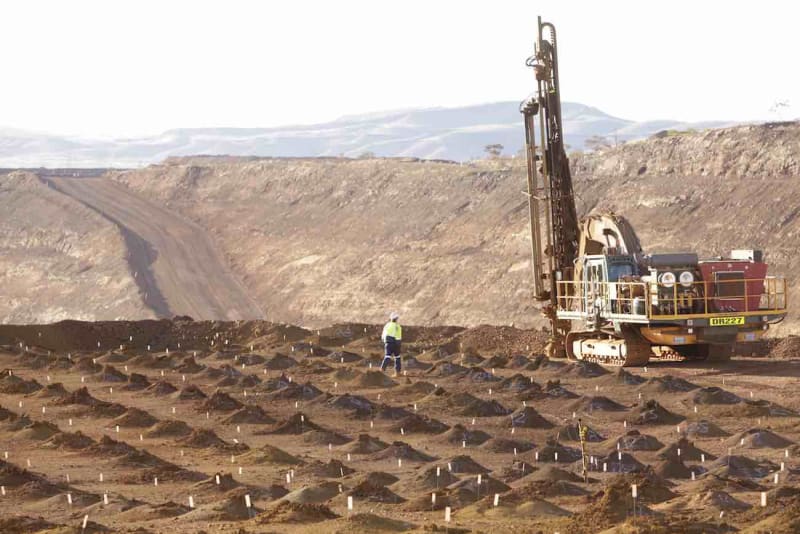
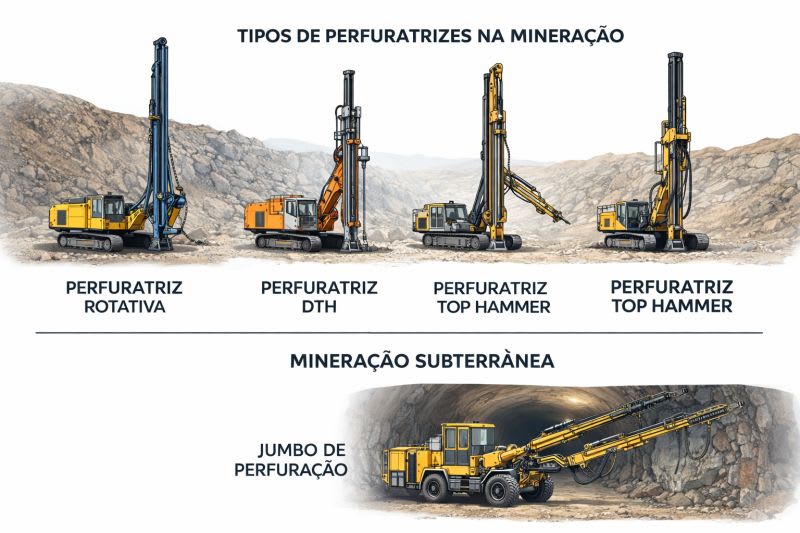
1️⃣Down-The-Hole (DTH) Drilling:💥
DTH drilling is like precision power! With this method, a hammer is located behind the drill bit, ensuring direct impact and efficient penetration through rock formations. Perfect for hard rock and deep drilling projects, DTH brings unparalleled accuracy and depth.
2️⃣Rotary Drilling:🌀
In the world of versatility, rotary drilling takes the spotlight. This technique involves a rotating drill bit that grinds away at formations. Ideal for soft or hard ground and sedimentary rocks, rotary drilling is a go-to for mining, construction and oil exploration, offering excellent sample retrieval.
3️⃣Top Hammer Drilling🚀
For rapid-fire drilling, top hammer takes the lead! Operating from the surface, the hammer strikes through the drill string to the drill bit, making it a champion for speed and shallow drilling. Top hammer is widely used in mining and quarrying, delivering quick results without compromising on accuracy. Hole size is a restriction with Top Hammer.
The choice of drilling method depends on geological conditions, project objectives, and desired outcomes. Each technique brings its unique strengths to the table, ensuring success in various industries.
Simple Schematic done up showing the Drill and Blast team general responsibilities throughout a Development and Production Mining Cycle in Underground Mining.
Presented during the Technical Team Knowledge Sharing Session
Source: Credits to Adrian Joe Gereg
Loading more posts...
05 Drilling
Covers drilling techniques for open pit and underground mining, including machinery, core drilling, and destructive drilling.
Drilling-focused trainings, demonstrations, and technical seminars.