



Posts Header

10 Loading and hauling

Covers material movement operations, including loading, transport, unloading, and fleet optimization.

Operational insights on cycle times, fleet sizing, conveyors, and productivity improvement.

ZVENIA Mining
Corporate at ZVENIA 17/02/2026

Not all haul trucks are created equal

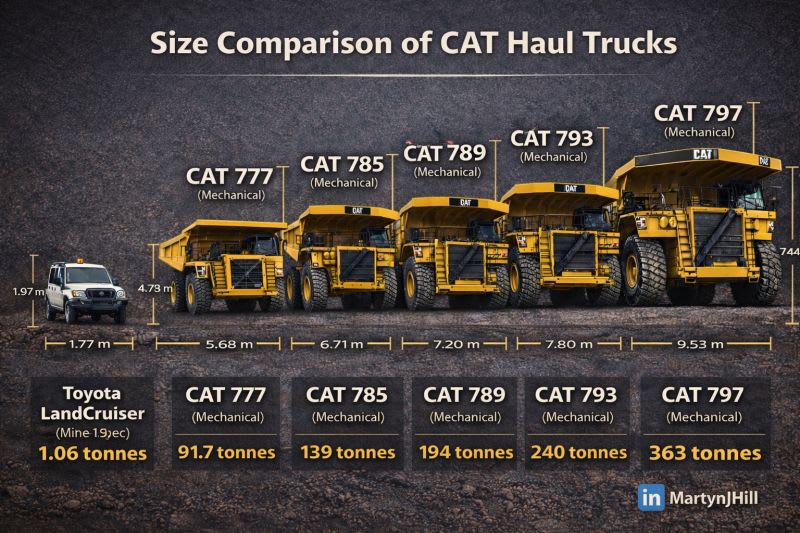
This side-by-side comparison shows just how quickly mining equipment scales, and why lumping machines together misses the reality of modern operations. A mine-spec Toyota LandCruiser is designed for mobility, inspections, and supervision. It weighs just over a tonne and operates in a low-consequence environment. Step into a CAT 777 and you are already dealing with a 90-plus tonne machine where braking distance, payload discipline, and ground conditions matter. Move up through the 785, 789 and 793 classes and each jump brings exponential increases in size, energy, tyre loads, maintenance complexity, and safety exposure. By the time you reach the ultra-class CAT 797, you are in a completely different operating category. At more than 360 tonnes, this truck does not simply service a mine, it defines it. Haul roads, pit geometry, maintenance workshops, fuel systems, and training frameworks are all engineered around equipment of this scale. This is why ultra-class fleets are typically found at tier-one operations run by miners such as BHP, Rio Tinto, Fortescue, Newmont and Vale. These machines only make sense where ore bodies are large, mine lives are long, and operational discipline is non-negotiable. The takeaway is simple. As equipment scales, so do the operating environments around it. Light vehicles, mid-class haul trucks and ultra-class fleets sit on a continuum of size, consequence and complexity, each requiring different levels of planning, support and experience. Scale does not change the fundamentals of mining, but it significantly changes how they must be managed.

Source: Credit to Martyn J Hill
Not all haul trucks are created equal
Like
3
ZVENIA Mining
Corporate at ZVENIA 12/03/2026

Factors that influence loading and transportation efficiency

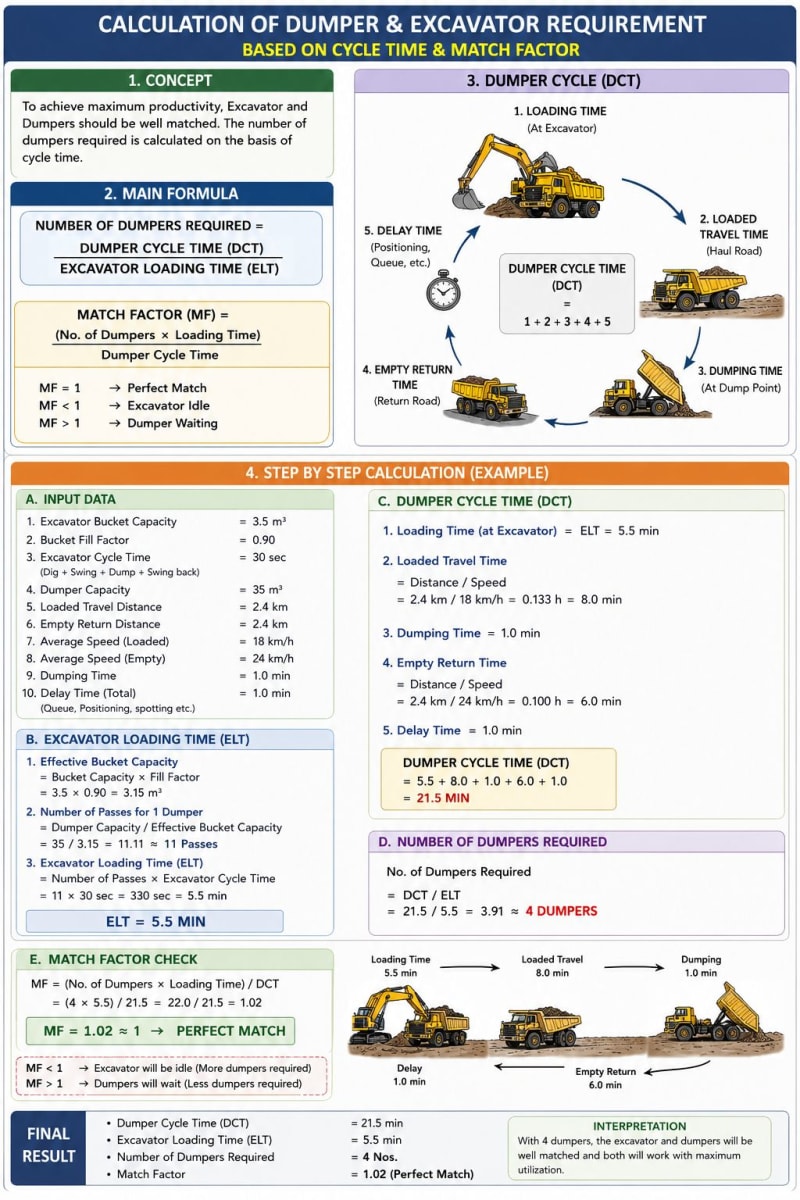
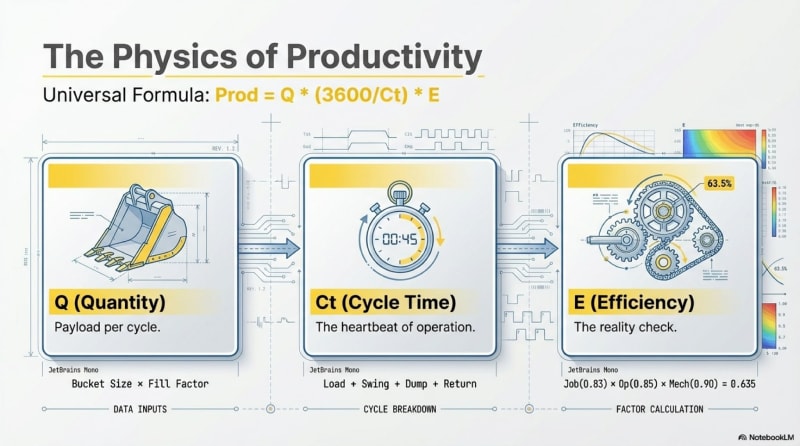
I’m preparing to start a short video series explaining effective mine transportation of materials in mining operations. Before we begin, it’s important to understand some basic factors that influence loading and transportation efficiency: 1️⃣ Bucket Capacity – The maximum volume of material that a loader or excavator bucket can hold, usually measured in cubic meters (m³). It determines how much material can be moved in one loading cycle. 2️⃣ Swelling Factor – The increase in rock or soil volume after blasting or excavation. Broken rock occupies more space than in-situ rock, which affects hauling and storage calculations. 3️⃣ Bucket Fill Factor – The ratio of the actual material loaded in the bucket to its rated capacity. It reflects the efficiency of loading operations and depends on material type and operator skill. Understanding these factors helps improve equipment productivity, haulage planning, and overall mine transportation efficiency. Stay tuned for the upcoming video where I will explain effective mine transportation methods and practical calculations used in mining operations.

Source: Credit to Jean Pierre N.
Factors that influence loading and transportation efficiency
ZVENIA Mining
Corporate at ZVENIA 11/03/2026

Effect of Swing Angle on Output

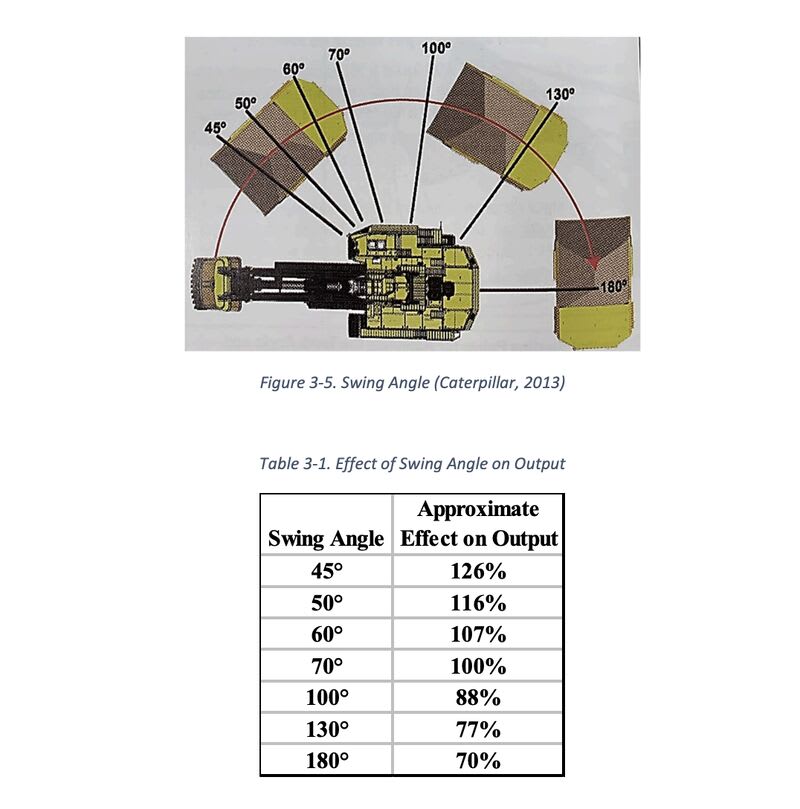
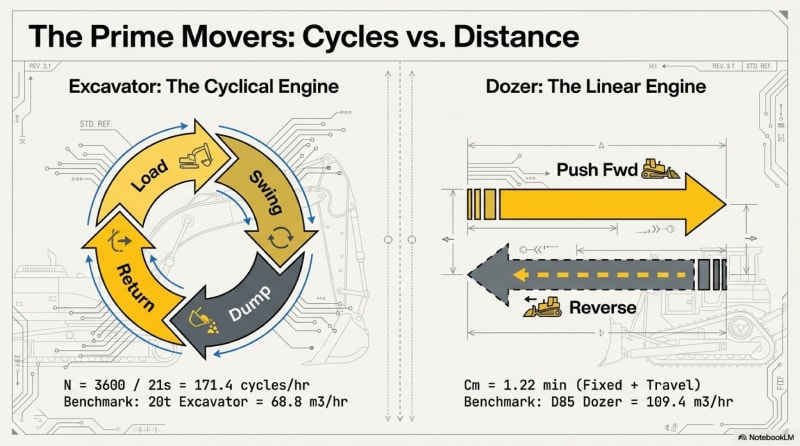
Most mines try to increase production by adding bigger trucks or bigger machines. But one simple thing affects output more than people think. Excavator swing angle. 45° swing → 126% output 70° swing → 100% output 130° swing → 77% output 180° swing → 70% output Every extra degree means more swing time, more fuel burn, and fewer cycles per hour. Good mines design loading areas so trucks sit close to the excavator and keep swing angles around 60° to 90°. Small change in positioning. Huge impact on production.

Source: Credit to Akash Singh
Effect of Swing Angle on Output
ZVENIA Mining
Corporate at ZVENIA 10/03/2026

Heavy Construction Equipment Market Set to Reach USD 286 Billion by 2030

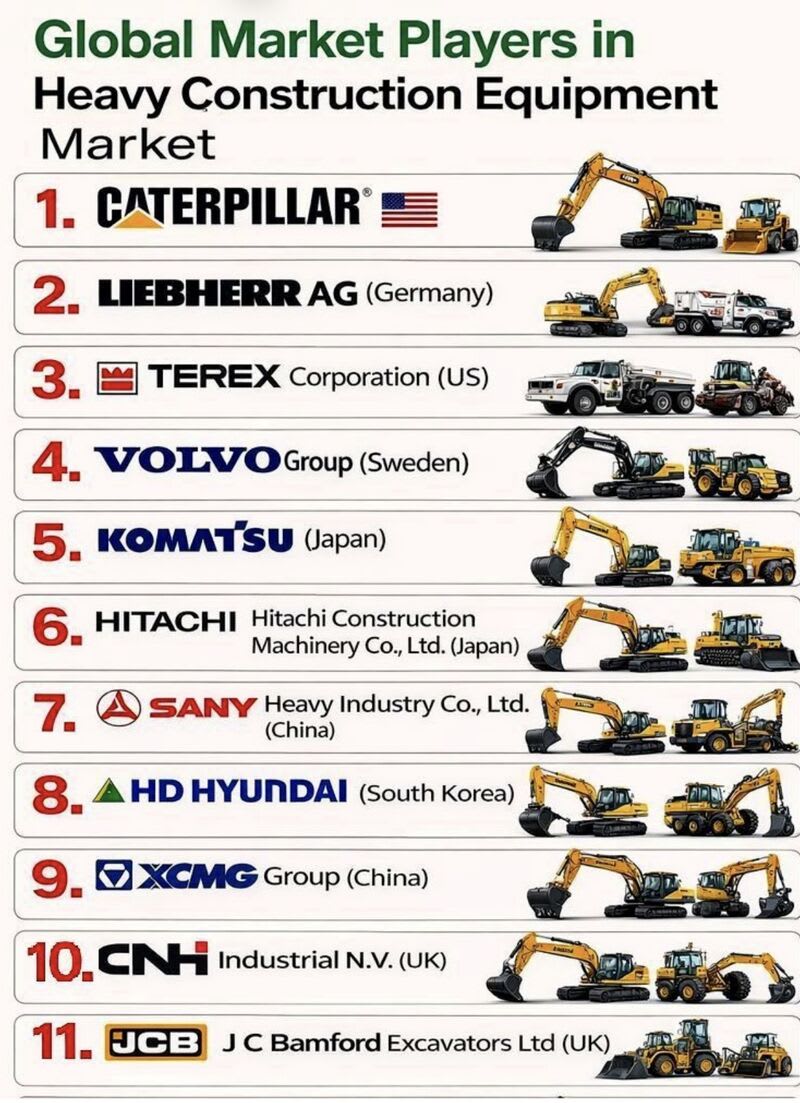
The global Heavy Construction Equipment Market is accelerating on the back of rising infrastructure investments, expanding mining operations, and rapid urbanization worldwide. 📈 The market is projected to grow from USD 224.49 billion in 2025 to USD 286.51 billion by 2030, registering a steady 𝟱.𝟬% 𝗖𝗔𝗚𝗥. 🔍 𝗪𝗵𝗮𝘁’𝘀 𝗣𝗼𝘄𝗲𝗿𝗶𝗻𝗴 𝗧𝗵𝗶𝘀 𝗚𝗿𝗼𝘄𝘁𝗵? ✔️ Large-scale infrastructure & housing developments ✔️ Increased mechanization across mining & construction ✔️ Rising demand for high-performance, fuel-efficient equipment ✔️ Technological advancements including electrification & hybrid systems 🚧 𝗦𝗲𝗴𝗺𝗲𝗻𝘁 𝗜𝗻𝘀𝗶𝗴𝗵𝘁𝘀 🔹𝗘𝗮𝗿𝘁𝗵𝗺𝗼𝘃𝗶𝗻𝗴 𝗘𝗾𝘂𝗶𝗽𝗺𝗲𝗻𝘁 𝗟𝗲𝗮𝗱𝘀 Excavators, loaders, backhoes, and motor graders dominate project sites worldwide. Hydraulic-powered systems continue to drive efficiency across excavation, grading, and material loading operations. 🔹𝗗𝗶𝗲𝘀𝗲𝗹 𝗣𝗿𝗼𝗽𝘂𝗹𝘀𝗶𝗼𝗻 𝗦𝘁𝗶𝗹𝗹 𝗼𝗻 𝗧𝗼𝗽 Diesel-powered machinery remains preferred for its high torque, durability, and performance in heavy-duty applications. 🔹𝟱–𝟭𝟬 𝗟 𝗘𝗻𝗴𝗶𝗻𝗲 𝗖𝗮𝗽𝗮𝗰𝗶𝘁𝘆 𝗶𝗻 𝗛𝗶𝗴𝗵 𝗗𝗲𝗺𝗮𝗻𝗱 Compact yet powerful equipment is gaining traction in urban construction, landscaping, forestry, and housing projects. 🔹𝟮𝟬𝟭–𝟰𝟬𝟬 𝗛𝗣: 𝗧𝗵𝗲 𝗣𝗲𝗿𝗳𝗼𝗿𝗺𝗮𝗻𝗰𝗲 𝗦𝘄𝗲𝗲𝘁 𝗦𝗽𝗼𝘁 This segment offers the ideal balance of power, fuel efficiency, and lower maintenance costs—widely used in excavators, loaders, and compactors. 🔹𝗠𝗮𝘁𝗲𝗿𝗶𝗮𝗹 𝗛𝗮𝗻𝗱𝗹𝗶𝗻𝗴 𝗧𝗮𝗸𝗲𝘀 𝘁𝗵𝗲 𝗟𝗲𝗮𝗱 Cranes and telescopic handlers play a crucial role across construction, mining, oil & gas, and infrastructure projects—making material handling the largest application segment. 🌏 𝗥𝗲𝗴𝗶𝗼𝗻𝗮𝗹 𝗢𝘂𝘁𝗹𝗼𝗼𝗸: 𝗔𝘀𝗶𝗮 𝗣𝗮𝗰𝗶𝗳𝗶𝗰 𝗗𝗼𝗺𝗶𝗻𝗮𝘁𝗲𝘀 The Asia Pacific region continues to lead the market, driven by: • Massive infrastructure expansion • Rapid commercial and residential construction • Strong OEM investments in electric & hybrid equipment innovation 🏗️ 𝗞𝗲𝘆 𝗜𝗻𝗱𝘂𝘀𝘁𝗿𝘆 𝗣𝗹𝗮𝘆𝗲𝗿𝘀 Industry leaders shaping the competitive landscape include: Caterpillar Inc. | Liebherr Group | Terex Corporation | Volvo Group | Komatsu | Hitachi Construction Machinery | SANY Group | HD Hyundai | XCMG Group | CNH Industrial | JCB As infrastructure ambitions scale globally and sustainability becomes central to equipment design, heavy construction machinery remains the backbone of economic development. Source: https://www.marketsandmarkets.com/pdfdownloadNew.asp?id=1211&utm_source=linkedin.com&utm_medium=social-ms&utm_campaign=ms-fpFEB

Source: Source Sanjiv Rathi
Heavy Construction Equipment Market Set to Reach USD 286 Billion by 2030
ZVENIA Mining
Corporate at ZVENIA 10/03/2026

Haul Roads in Open Pit Mining – The Arteries of Mine Operations

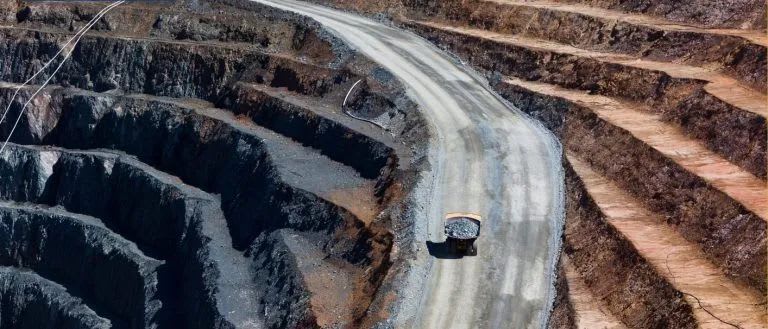
In open-pit mining, productivity depends heavily on how efficiently material moves from the pit to the processing plant or waste dumps. At the centre of this movement are haul roads — the pathways that carry thousands of tonnes of material every day. This week, we examine the significance of haul road design and its crucial role in ensuring safety, minimising costs, and enhancing operational efficiency. 🚜 What Are Haul Roads? Haul roads are specially designed roads used by heavy mining trucks to transport ore and waste within a mine. These roads must withstand extremely heavy loads while allowing safe and efficient truck movement. Unlike public roads, haul roads are engineered specifically for large mining equipment and continuous operations. 📏 Key Elements of Haul Road Design 1. Road Width Must accommodate large haul trucks safely, especially on two-way traffic routes. 2. Gradient (Slope) Steeper roads increase fuel consumption, reduce truck speed, and increase wear. 3. Road Surface Quality Proper grading and maintenance reduce tyre damage and improve vehicle stability. 4. Safety Berms Raised edges along the road prevent trucks from accidentally leaving the roadway. ⚙️ Why Haul Roads Matter 🚀 Improves truck productivity and cycle times 💰 Reduces fuel consumption and operating costs 🛠️ Minimises equipment wear and tyre damage 🛡️ Enhances safety for operators and equipment 📉 Reduces downtime due to poor road conditions Well-maintained haul roads can significantly improve overall mine performance. 🎯 The Bigger Picture Haul road design may seem simple, but it directly influences: Truck efficiency Production targets Operating costs Safety performance In many mines, small improvements in haul road quality lead to major gains in productivity. 💬 In your experience or opinion, what affects haul road performance the most — gradient, surface condition, or traffic management? If this added value, like, comment, follow, and repost to keep advancing mining knowledge.
Source: Credit to Theophilus Kyeah
Haul Roads in Open Pit Mining – The Arteries of Mine Operations
ZVENIA Mining
Corporate at ZVENIA 03/03/2026

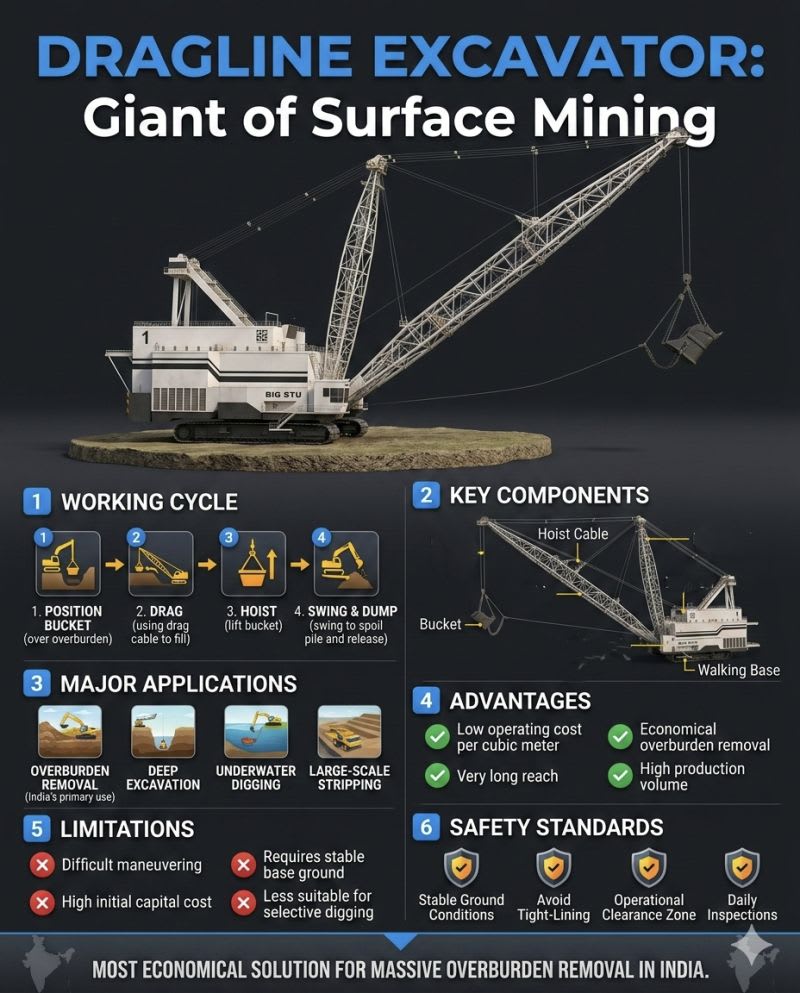
DRAGLINE EXCAVATOR — The Giant of Surface Mining

In large-scale surface mining, the dragline excavator is one of the most powerful and economical machines for overburden removal. 🔹 What is a Dragline? A dragline is a large excavating machine with a long lattice boom mounted on a revolving unit. A hoist cable supports the bucket, while a drag cable pulls it toward the machine. 🏗️ Key features: • Lattice steel boom • Bucket with hoist & drag cables • Boom hoist ropes for boom control • Drag cable for pulling • Hoist cable for lifting 👉 The bucket fills by dragging across loose material, then is lifted and swung to dump. --- ⚙️ Basic Working Cycle 1️⃣ Position bucket near face 2️⃣ Drag to fill 3️⃣ Hoist loaded bucket 4️⃣ Swing to dump point 5️⃣ Dump material 6️⃣ Return for next cycle ✨ Long reach often eliminates haulage, making draglines the cheapest OB removal method in many opencast mines. --- 🎯 Major Applications ✔️ Overburden removal (direct casting) ✔️ Topsoil handling ✔️ Blasted rock handling ✔️ Soft/unconsolidated excavation ✔️ Stockpile rehandling ✔️ Underwater stripping ✔️ Muddy or unstable ground ✔️ Placer mining ✅ Best in soft to semi-consolidated strata ❌ Not suitable for steep gradients, uneven footwall, or very hard rock --- 🚶 Types (by mounting) 🐛 Crawler mounted 🚃 Wagon mounted 🛤️ Track mounted 👣 Walking type (very large machines) --- 📐 Boom Geometry • Vertical: ~25°–60° (common 30°–35°) • Horizontal swing: 0°–180° Bucket Highlights Open-front box bucket with: • Hoist chains • Drag chains • Dump sheave • Spreader bar • Drag yoke • Manganese steel teeth (18°–22° attack) . ⚡ Factors Affecting Penetration • Bucket weight & balance • Teeth sharpness • Drag angle (~16°–18°) • Ground diggability • Cutting angle 📈 For higher production: • Avoid multiple passes • Keep drag distance ≈ 2–3× bucket length • Minimize swing angle • Optimize hoist height 🔋 Power System Modern draglines use AC synchronous motors (3.3–6.6 kV). Motor-generator sets supply DC power to hoist, drag, and swing motors. 🧩 Major Components Bucket • Lattice boom • Hoist system • Drag system • Swing system • Propelling mechanism • Undercarriage • Fairlead • Lubrication system • Operator cab --- 🧠 Safety Best Practices ⚠️ Keep drag cable clear of muck ⚠️ Avoid excessive swing ⚠️ Prevent tight-lining ⚠️ Maintain well-graded ground ⚠️ Check slope stability ⚠️ Reposition machine periodically 📊 Dragline vs Shovel (Quick View) Reach: Dragline ✔️ higher Flexibility: Dragline ✔️ higher Loading efficiency: Shovel ✔️ higher OB casting: Dragline ✔️ excellent Haulage need: Dragline ✔️ often none ✅ Conclusion: Draglines are more economical for large-scale overburden stripping in soft formations.

Source: Credit to Hemanta Kumar Mahanta HM
DRAGLINE EXCAVATOR — The Giant of Surface Mining
Like
1
ZVENIA Mining
Corporate at ZVENIA 27/02/2026

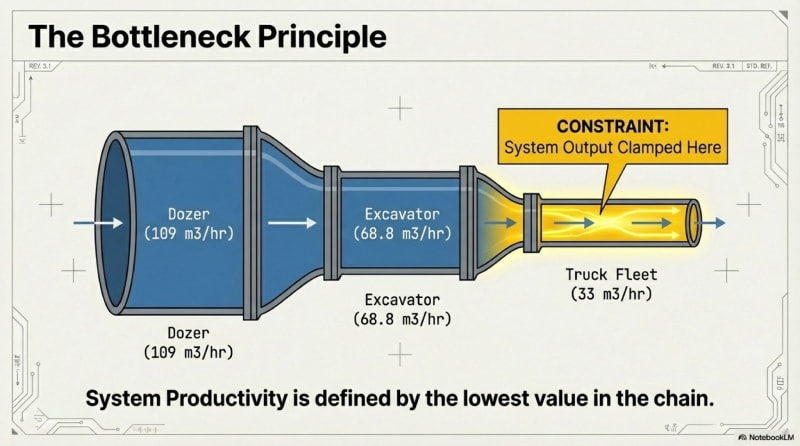
Let’s talk about bottlenecks

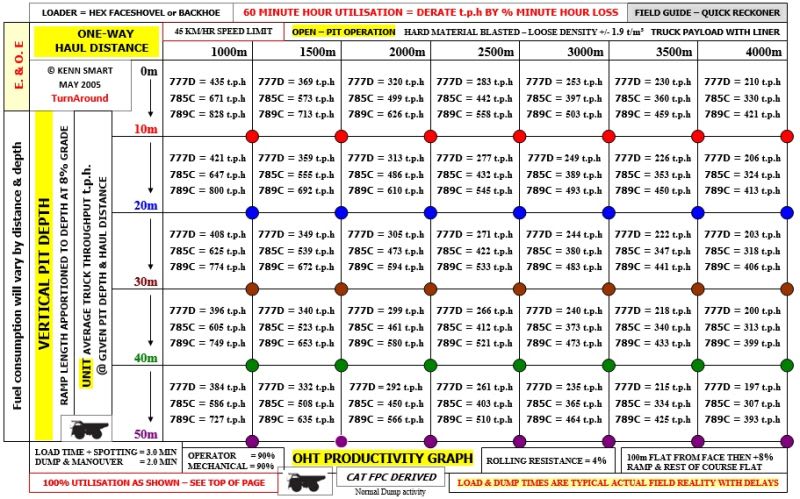
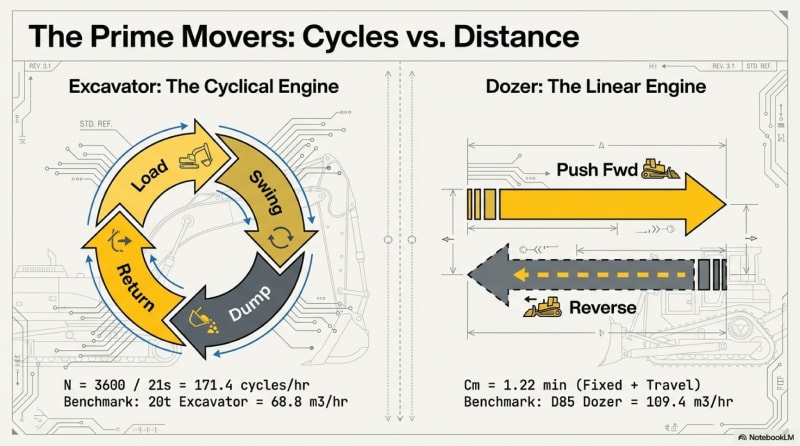
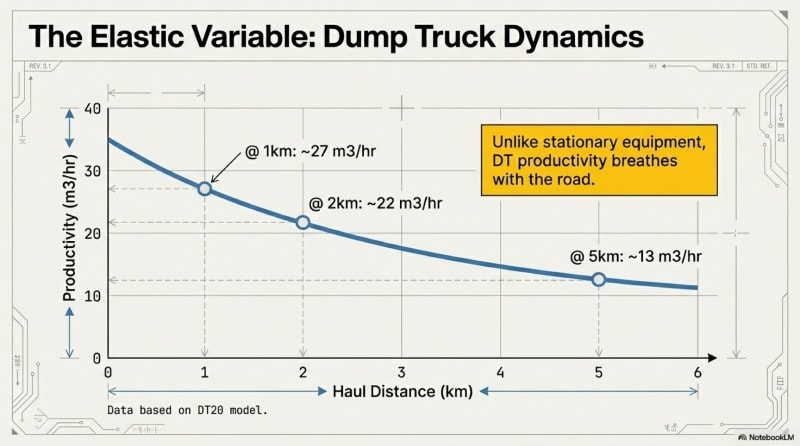
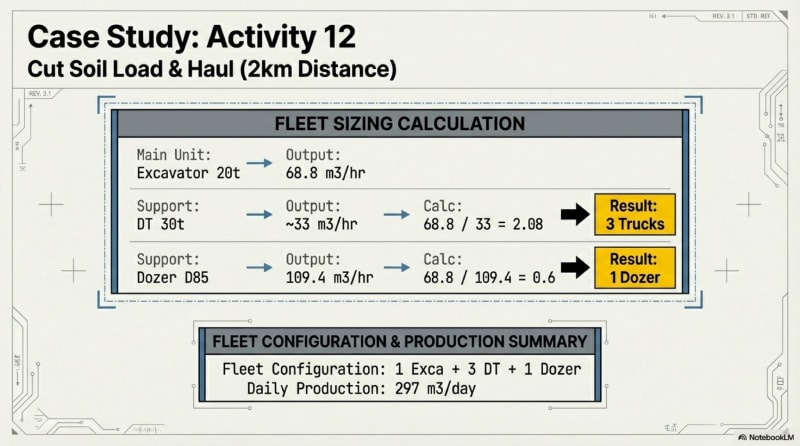
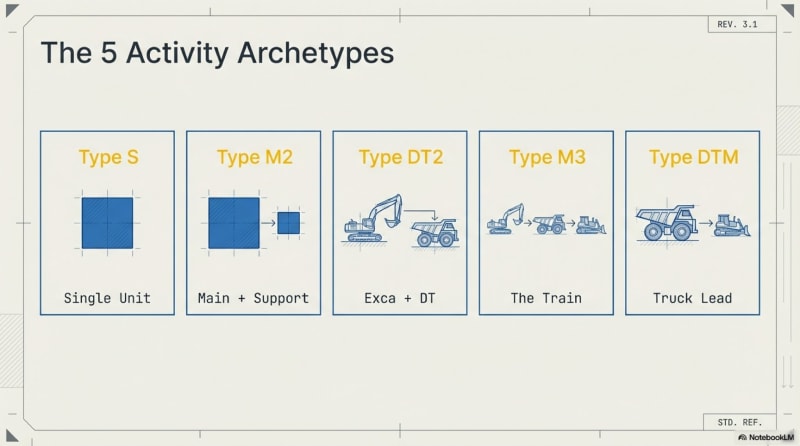
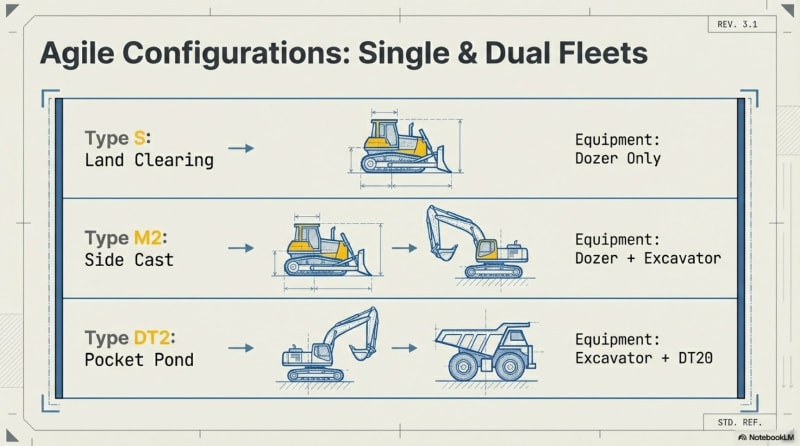
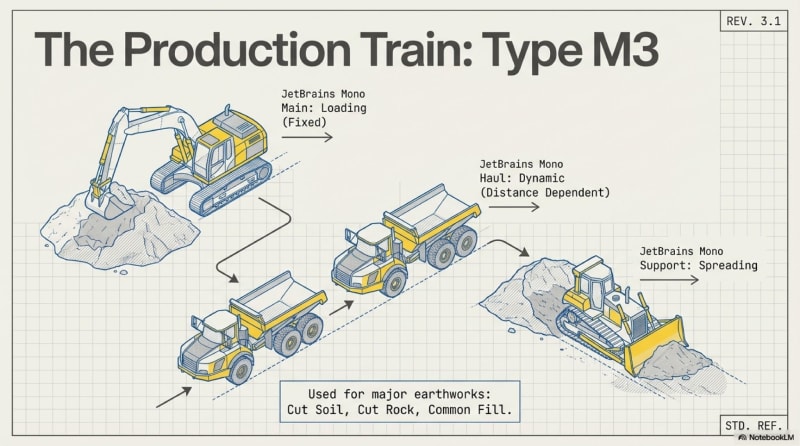
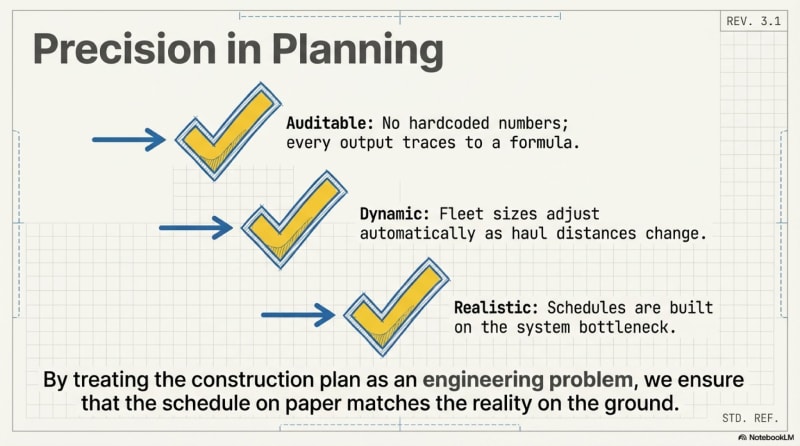
In earthworks, your fleet is only as fast as its slowest link. I’ve been working with a calculation flow that identifies this system productivity by finding the "minimum" output across the whole team—whether it’s the excavator, the dozer, or the trucks. Using Caterpillar and Komatsu standards, this system maps out 26 different activity types from land clearing to quarry blasting. The best part? The dump truck productivity is dynamic, so it automatically updates as haul distances change. No hardcoded numbers—just auditable Excel logic that converts everything into accurate Bank Cubic Meter (BCM) results. Efficiency isn't just about moving dirt; it's about the data behind it.

Source: Credit to Yanuar Ade Putra
Like
1
ZVENIA Mining
Corporate at ZVENIA 30/11/2025

The Science of Haul Road Economics

Mine Manager’s Playbook Series Haul roads look simple. They are not. They are the biggest hidden cost centre in open-pit mining. A shovel can be world-class. A fleet can be brand new. Explosives can be perfect. But if the haul road is bad, the mine becomes slow, expensive, and unproductive — every single hour. The Financial Truth No One Talks About Every 1% increase in rolling resistance causes 10% loss in truck productivity. Just one soft patch, one wet curve, one ungraded segment… and your entire fleet behaves underpowered. You won’t see this in fuel sheets. You won’t see it in daily MIS. You’ll only see it in the total cycle time, the silent killer of mine economics. Where Haul Roads Drain Money 1️⃣ Fuel Burn Bad roads increase diesel consumption by 15–35%. Multiply that by 20–30 trucks and the numbers become brutal. 2️⃣ Payload Loss Operators start playing safe. “Almost full loads” replace full loads. You lose BCM quietly. 3️⃣ Tyre Life Crash Rough roads kill tyres 40–60% faster. Each tyre costs USD 3,000–5,000. A road can wipe out your tyre budget faster than any operator mistake. 4️⃣ Shovel Starvation Slow trucks → empty shovels → lost tonnes → lost month-end targets. 5️⃣ Maintenance Backlog More braking = more heat = more failures. Your workshop gets punished for road issues. The Core Science A Mine Manager must master one chain: Geometry → Rolling Resistance → Speed → Cycle Time → Cost/BCM → Profitability Fix this chain and your mine performance transforms. Four Engineering Truths • Geometry: Gradient, curvature, super-elevation. A truck runs on engineering, not hope. • Surface Quality: Corrugation, ruts, potholes — these are cost signals, not “road conditions.” • Width & Berms: If operators feel unsafe, they reduce speed. Safety and speed go together. • Drainage: Water destroys most haul roads. Poor drainage destroys the rest. The Behaviour Side (Most Ignored) Good road design loses 50% of value if behaviour is poor: – lane discipline – over-speeding on straights – shortcuts on curves – inconsistent water bowser cycles – reactive grading instead of scheduled grading Road science is half engineering, half discipline. The Most Important KPI in Open-Pit Mining Not fuel burn. Not tyre cost. Not tonnes per hour. It’s “Average Speed on Loaded Haul.” Increase it by even 1 km/h, and your mine’s monthly profit moves instantly. Mine Manager’s Non-Negotiables ✔ Grade every shift ✔ Maintain drainage religiously ✔ Enforce lane discipline ✔ Prevent truck queues at shovel ✔ Measure rolling resistance weekly ✔ Audit roads using drones ✔ Make road quality a production KPI Because the truth is simple: Mines rarely lose money in digging. They lose it on the road.

Source: Credit to Mahesh Raheja
The Science of Haul Road Economics
Like
1
Mohamed Coulibaly
Mining Engineer 13/10/2025

Les Méthodes et Techniques de Mises à Terril dans les Mines à Ciel Ouvert

Le transport établit la liaison entre le fond de la carrière et le point de déchargement des produits (stérile et minerai). Il a pour objet non seulement de déplacer des minerais mais aussi des stériles qui représentent souvent la principale partie de la circulation des produits dans une exploitation à ciel ouvert. L ’objet du transport étant l ’évacuation des minéraux utiles et des stériles, le minéral est transporté dans des ateliers d ’enrichissement, des usines, des stations électriques et des gares de chemin de fer pour être expédié aux utilisateurs. Les stériles sont mis en terrils. Ceux-ci sont placés en dehors des limites du gisement en cours d’exploitation ou bien dans le vide de l ’exploitation. Dans le premier cas, les terrils sont dits extérieurs, dans le second, intérieurs. Qu’ils soient intérieurs ou extérieurs, les terrils ont soit un seul, soit plusieurs gradins et peuvent s’étendre par déplacement parallèle, en éventail ou en anneau du front des déblais.

Like
1

Preview of ZVENIA Mining

Sign up to get unlimited content. No credit card needed.

Sign Up Free