



test Yahoo
test Yahoo content
Practical articles on dewatering, road construction, dumps, stockpiles, site access, and preparation of mining areas.
test Yahoo content
Comparto con ustedes este banco de preguntas que elaboré en compañía de mis colegas Diego Burgos Huanambal y Danny Cao. Esperamos que este material pueda ser de utilidad para su preparación académica y profesional en temas de minería. Sigamos aportando conocimiento y fortaleciendo nuestra comunidad minera.
This week’s safety meeting reminded me how something as “routine” as barring can be the difference between life and death underground. Barring is often one of the first tasks we perform at the start of a shift — but it’s also one of the most underestimated. In gold mining, especially in South African operations, most ground-related accidents are traced back to substandard barring. The purpose of a barring buddy isn’t just to stand by — it’s to be your second pair of eyes, ensuring your safety while you ensure the ground’s stability. It’s teamwork in its purest form: one focuses on the rock, the other on the risk. From our safety officer’s reminders to daily observations, I’ve learned that the best production starts with a safe workplace. The time spent barring properly is never wasted — it’s an investment in life itself. Let’s all remember: No bar, no start. What are some of the small safety practices on your mine that make the biggest difference? 💬 #MiningSafety #GoldMining #ZVENIA #ProfessionalGoldDigger #WomenInMining #GroundControl #SafeBarSafeStart #SouthAfricanMining
Large diameter raise boring is commonly used for developing cylindrical vertical to inclined shafts in underground mines. The circular cross section is favourable from a geotechnical perspective, and a significant benefit of raise boring is an improvement in safety with the removal of personnel to work directly in the shaft during development. However, unlike conventional shaft sinking, if ground conditions are poor, there is no generally little or no opportunity to install support until the shaft is completed. As such, shaft conditions need to be well understood prior to commencing development to determine whether the shaft can remain stable throughout the back-reaming process, or stable with pre-support. An alternative location needs to be sought if conditions in the selected location are not amenable to raise boring at the desired diameter, otherwise the shaft might collapse, and the expensive gear lost. Unsafe conditions could also arise if conditions are not amenable. The geotechnical investigation requirements will vary depending on the shaft development method and geotechnical conditions at the shaft location. For the highest confidence in results, the investigation drillhole should be located as close as possible to the planned shaft axis (within 10 m) and hole deviations should be understood when assessing the confidence of results along the length of the shaft. However, there are circumstances where 10 m can be too large, such as the presence of sub-vertical adverse geological structures which might be intersected by the raise but not by a drillhole placed along the raise axis. There would be a residual risk that an unknown subvertical structure close to the raise can lead to significant failure or falloff. If there was a history of this at the site, there might be a case to drill inclined holes to confirm that there are no adverse dykes or structures near the proposed raise, at least in the weathered zone. Although the investigation drillhole should be positioned as close as possible to the planned raise, it is important to consider that reaming cannot be conducted through drill rods if they become stuck in the hole. If that is considered to be a risk, the cover hole should be stepped off by about 5 m. Other considerations for data confidence include core loss, whether from navigational drilling (which should be avoided) or from poor ground conditions. HQ triple tube drilling should be considered throughout any weathered or weak rock zones and in all cases, careful core handling and marking of drillers’ breaks should be diligently applied. In some circumstances, the geotechnical investigation drillhole might not be required. For example, at a mine where there is already significant experience in raise drilling and the geological and geotechnical conditions are already well known (and consistent), investigation drillholes are not required for shorter and smaller diameter raises (such as escapeways). However, for any large diameter raises, the risks associated with low data confidence should be well understood if a shaft investigation drillhole is not undertaken. Comprehensive practical guidance on raise bore and shaft geotechnical analysis is presented in Mine Mentor’s module on the topic. To learn more, visit: https://mine-mentor.com/learning/
En minería, solemos escuchar frases como “hay que optimizar el proceso” o “necesitamos mejorar la operación” y para algunos resulta ser lo mismo, aunque parecen equivalentes, no lo son. La optimización y la mejora continua persiguen metas distintas, se aplican en momentos diferentes y exigen herramientas propias. Técnicamente, "Optimización" se define como la búsqueda del mejor resultado posible a través de un estudio matemático y simulación. Dicho en otras palabras optimizar significa ajustar un proceso para lograr el máximo rendimiento o el mínimo costo dentro de ciertas restricciones. En minería a cielo abierto, un ejemplo típico es la programación de fases con softwares como Whittle o Vulcan, que buscan maximizar el valor presente neto del yacimiento. En ese mismo camino, en minería subterránea, la optimización se refleja en metodologías como Mine-to-Mill, que ajustan desde la fragmentación en tronadura hasta la molienda, reduciendo consumo energético y elevando la recuperación de mineral. Mientras que la Mejora continua se define como pequeños pasos que construyen resultados. Es decir la mejora continua se centra en identificar fallas, eliminar ineficiencias y reforzar la cultura de trabajo. Aquí entran metodologías como el ciclo PHVA (Planificar, Hacer, Verificar, Actuar). En la práctica, puede significar ajustar protocolos de ventilación en minería subterránea, reducir la dilución en perforación y tronadura, o rediseñar el flujo de transporte de mineral en faenas a cielo abierto. Estos dos conceptos podrian explicarse facilmente de la siguiente manera. - Optimización: es cuantitativa, se apoya en modelos y simulaciones. - Mejora continua: es iterativa, sistematica, puede llegar a ser repetitiva se enfoca en hábitos, cultura y ajustes prácticos. - Secuencia lógica: mejorar primero, optimizar después. ¿Por qué importa esta distinción? Un proceso mal diseñado no puede ser optimizado con éxito. Primero hay que mejorarlo, estandarizarlo y estabilizarlo. Solo después es posible aplicar herramientas de optimización que realmente generen valor. En minería, confundir estos términos puede llevar a inversiones en software avanzado sin haber resuelto antes problemas básicos de gestión, seguridad o cultura organizacional. Reflexión final Optimización y mejora continua no compiten: se complementan. La primera ofrece resultados medibles y cuantificables; la segunda asegura que esos resultados se sostengan en el tiempo. Juntas, son la clave para una minería más rentable, eficiente y sostenible.
✅ Definition of Size Reduction Processes Size reduction represents one of the most vital initial stages in mineral ore processing, where large rock masses are broken down to sizes suitable for subsequent chemical or physical treatment. These processes refer to the mechanical efforts aimed at decreasing the natural ore size into smaller particles that align with the requirements of the next stage, whether grinding, leaching, or concentration. The primary objective is to achieve effective liberation of valuable minerals from the host rock and increase the surface area available for reaction, thereby enhancing the overall extraction efficiency. 🛠️ Types of Crushing Ores typically pass through two main stages of crushing, each contributing to the gradual reduction of particle size in a manner that supports the operational needs of the production line. Primary crushing deals with the large rocks directly extracted from the ground or blasting areas. The aim is to reduce these oversized materials into transportable pieces using conveyors or trucks. Common equipment used in this phase includes the jaw crusher and gyratory crusher, both known for their ability to handle large sizes and high hardness. Secondary crushing follows the primary stage, focusing on refining the particle size further and producing a more uniform product. Equipment such as cone crushers and impact crushers are employed at this stage to efficiently achieve the desired size suitable for downstream processes. 📌 Importance of Crushing in Gold Extraction Crushing plays a critical role in improving the efficiency of gold extraction, as it prepares the ore in an optimal form for chemical or physical processing. Firstly, crushing increases the specific surface area of ore particles, allowing for better interaction with chemical reagents like cyanide during leaching processes. Secondly, reducing the particle size enables the liberation of fine gold particles from the host minerals, which is essential for achieving high recovery rates. Additionally, these processes reduce the burden on grinding units and lower energy and reagent consumption, ultimately decreasing the plant's operating costs. 🎛️ Controlling the Crushing Process Effective control of the crushing stages is key to maintaining process stability, reducing losses, and achieving optimal efficiency. Control begins by adjusting the discharge opening of crushers to match the target size for the next stage. Regulating the feed rate into the crushers is also essential to avoid overloading, which can cause blockages or premature wear of equipment. Screening systems are used to separate the desired particle sizes and return oversize material for re-crushing, ensuring a consistent size distribution. Routine maintenance and regular analysis of the crushed product are vital for monitoring performance and sustaining high-quality production. ⚙️ Key Performance Indicators (KPIs) To evaluate the effectiveness of the crushing process, a range of technical performance indicators is utilized to guide operational improvements and optimize results. One of the most important indicators is the measurement of the product's median size (such as P80), representing the size through which 80% of the material passes. Crushing efficiency is also monitored in relation to energy consumption, along with the production rate in tons per hour. These KPIs provide a comprehensive picture of equipment performance and product quality, enabling informed and data-driven operational decisions.
In gold processing, the ore preparation stage is the initial step in the series of core operations aimed at improving ore quality and increasing recovery rates. This phase relies on crushing and screening technologies to reduce ore size and remove unwanted impurities, making it ideally suited for subsequent agglomeration and leaching processes. Key Ore Preparation Equipment: 1️⃣ Jaw Crusher: Used to reduce the size of large rocks during the primary crushing stage. 2️⃣ Secondary Crusher: Further reduces the size of the material from the jaw crusher, producing finer particles for screening and processing. 3️⃣ Screening: Separates raw materials based on size using vibrating screens, ensuring particle size compatibility for the next processing steps. 🛡️ Occupational Health and Safety: These processes require strict safety measures, including: 🦺 Wearing Personal Protective Equipment (PPE). 💨 Dust extraction systems to minimize harmful emissions. 🔧 Regular equipment maintenance to prevent breakdowns and accidents. ⚗️ Agglomeration: Agglomeration is a crucial step in preparing ore for Heap Leaching, where fine raw materials are mixed with cement and water to form solid, cohesive agglomerates. These agglomerates contribute to: 🏗️ Improving the stack stability during heap formation. 💧 Ensuring even distribution of cyanide solution within the heaps. 📉 Reducing the loss of fine particles, thus enhancing gold recovery. تجهيز الخامات والتكوير في المعالجة بالنض: في صناعة معالجة الذهب، تُعد مرحلة تجهيز الخامات الخطوة الأولى في سلسلة العمليات الأساسية التي تهدف إلى تحسين جودة الخام وزيادة معدلات الاستخلاص. تعتمد هذه المرحلة على تقنيات التكسير والغربلة لتقليل حجم الخام وإزالة الشوائب غير المرغوبة، مما يُهيئه بشكل مثالي لعمليات التكوير والنض اللاحقة. ⚙️ معدات تجهيز الخامات الأساسية: 1️⃣ الكسارة الفكية (Jaw Crusher): تُستخدم لتقليل حجم الصخور الكبيرة في المرحلة الأولى من التكسير. 2️⃣ الكسارة الثانوية (Secondary Crusher): تُقلل الحجم الناتج من الكسارة الفكية إلى جزيئات أدق لعمليات الغربلة والمعالجة. 3️⃣ الغربلة (Screening): تفصل المواد الخام حسب حجمها باستخدام شبكات اهتزازية لضمان توافق الجزيئات مع متطلبات العمليات اللاحقة. 🛡️ السلامة والصحة المهنية: تتطلب هذه العمليات إجراءات صارمة تشمل: 🦺 ارتداء معدات الوقاية الشخصية. 💨 أنظمة شفط الغبار لتقليل الانبعاثات الضارة. 🔧 صيانة دورية للمعدات لتجنب الأعطال والحوادث. ⚗️ التكوير: تمثل عملية التكوير خطوة جوهرية في تهيئة الخام للنض (Heap Leaching)، حيث يتم خلط المواد الخام الناعمة مع الأسمنت والماء لتكوين كرات صلبة ومتماسكة. هذه الكرات تساهم في: 🏗️ تحسين تماسك الأكوام أثناء التكديس. 💧 توزيع متساوٍ لمحلول السيانيد داخل الأكوام. 📉 تقليل الفقد في الجزيئات الدقيقة، مما يعزز استخلاص الذهب. 🌍 أهمية هذه العمليات: 🔹 زيادة كفاءة استخلاص الذهب عبر تحسين تماسك المواد الخام وتوزيع السيانيد. 🔹 تقليل الفاقد من الجزيئات الدقيقة أثناء النقل والمعالجة. 🔹 الالتزام بالاستدامة البيئية من خلال تقليل الغبار والنفايات المعدنية.
La importancia de un regadío segmentado en las rampas. Nos permite tener control para el frenado de los caex y a la vez nos ayuda a controlar la polución. Desde la instrucción de nuestros operadores hasta la ejecución en terreno, necesitamos ser consistentes en lo que hablamos y en lo que hacemos, siempre enfocados en generar las mejores condiciones en seguridad para operar y lograr nuestras metas. Confirmar nuestros procesos es clave para generar una cultura de mejoramiento continuo, vamos por más, siempre más.
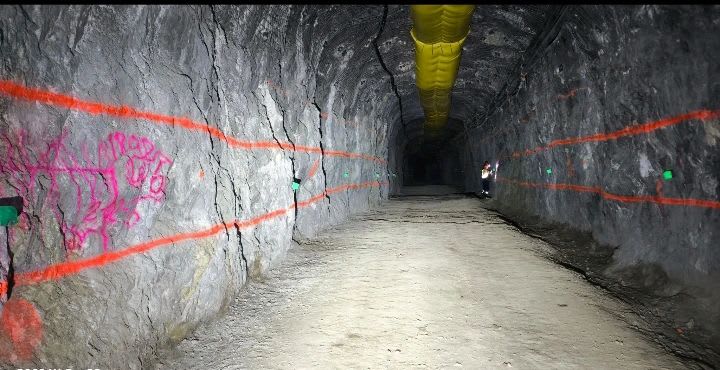
The main underground mining operations can be summed up under seven headings corresponding to the life cycle of the operation: 1️⃣ Preparatory work to access the ore by shaft or chute : Depending on the configuration of the deposit (topography, depth, spatial envelope, etc.) and the geomechanical characteristics of the host rock and ore, access routes can be created by digging a shaft or a drift. Shafts and galleries are dug using drilling and blasting equipment (for hard and/or abrasive ground)💥, or using tunnel boring machines or point-attack machines (for softer and/or less abrasive ground). 2️⃣ Blasting 💣 Blasting is one of the basic operations involved in moving an infrastructure work forward (digging a downspout), but it is also part of the ore mining cycle (tracing) or digging the host rock. The ore blasting operation is carried out : 📍 Either using explosives🧨, in which case blast holes must first be drilled. 📍 Or directly by mechanical blasting using specific machines (spot blasters, cutters, etc.), blasting the materials according to their geomechanical characteristics and the opening of the blasting site. 3️⃣ Purging and underpinning ⚠️: 📍 The basic purging operation, which is quite delicate, consists of removing from the vault and the face any unstable blocks and flakes that may have been shaken by the blast. This safety measure must therefore be carried out systematically during the advance cycle before the underpinning operation. It can also be carried out before a manual drilling operation (depending on the terrain) and is a prerequisite for safe access to the site. 📍 The underpinning operation is carried out after the site has been made safe by purging. It consists of reinforcing the stability of the walls by various means, such as timbering or metal frames, anchoring, bolting, gunning and walking underpinning (which is rarely or never used at present). 4️⃣ Loading/Transport (Marining) 🚛: The marining operation consists of loading the cuttings and evacuating them quickly so as not to penalise the production cycle. Marining is generally carried out using wheeled loading equipment (more rarely on rails) adapted for the bottom and capable of driving to a stockpile at the bottom or to a lorry loading point for haulage. More rarely, on small, low-productivity sites, clearing is carried out using a winch for scraping towards a jet stack, or using a vibrating feeder (racking). 5️⃣ Dewatering 💧 Dewatering is the technical name given to operations to remove water from mining sites by pumping or gravity flow. 6️⃣ Ventilation 🌬️ Ventilation is essential to the safety and well-being of miners working underground. 7️⃣ Backfilling 🔄 This operation makes it possible to: ➕ Increase the recovery rate in certain cases (e.g. chamber and pillar mining). ➕ Resolve problems of ground instability. ➕ Minimise driving distances (rising/dependent sections, tamping).
Raise mining has been a fundamental part of underground development for decades. However, in recent years, it has been phased out in many operations due to the risk of exposing workers to an unsupported face. I had the opportunity to punch a few 60’ raises in Bissett, Manitoba, alongside one of the best in the game—Tom Clark. He took me under his wing, teaching me how to drill, fan out from a single spot, and properly set up for the next day. At 20 years old, I didn’t fully understand what I was walking into, but one thing was for sure—this was a "finish the job, go home" type of work. I’ll never forget going underground with my bagged lunch from the caf, feeling like a school kid. Tom looked over, told me to take my cookies out, and threw the rest away, saying: "You won’t need this today—we’ll be up by lunch." That was one of the hardest days of work I’ve ever done. Tom, pushing 60, made it look effortless while I could barely keep up. A Look at Raise Mining Methods: 🔹 Open Raise Mining – Used for short vertical raises, typically under 80 feet. Before blasting, holes were drilled to secure timbers, creating a stable platform for workers to stand on while drilling the next round. These timbers, chained to the wall, also formed a cradle that held drills, steel, and ground support for the next setup. 🔹 Alimak Raise Mining – Used for longer distances, this system operates on a rail-mounted platform that moves up and down the raise. The rails not only guide the platform but also supply air and water for drilling. The mobile platform carries drills, steel, and ground support, allowing crews to access the active face efficiently. In some setups, a scoop can muck out blasted rock from a separate drift to keep the raise clear. 🔹 Raise Bore & Alimak Hybrid – A newer variation using a top-down approach. The raise bore creates a pilot hole, and the team blasts downwards, reducing direct exposure to an unsupported face. This method has gained traction for its improved safety and efficiency. Raise mining has evolved, but the grit and skill it demanded will always be something to respect. To those who’ve done it—you know exactly what I mean. What’s your experience with raise mining? Let’s hear your stories in the comments! Unfortunately talking about these and finding pictures to illustrate what I am talking about is quite difficult. Found some Alimak photos to add!
Este apunte es una guía concisa y práctica que cubre desde los principios de operación y el análisis geotécnico de macizos rocosos, hasta el diseño estructural de revestimientos y las innovaciones más recientes. Ideal para ingenieros y estudiantes que buscan información precisa, ejemplos claros y recomendaciones de campo.
This comprehensive map, built from decades of lunar mission data (Apollo-era, LRO, SELENE), provides a standardized view of the Moon’s geology. For mining and geotechnical engineers, it’s an essential tool for quarry site planning and evaluating material availability. Key Insights for Quarry Site Planning 𝗜𝗱𝗲𝗻𝘁𝗶𝗳𝘆𝗶𝗻𝗴 𝗢𝗽𝘁𝗶𝗺𝗮𝗹 𝗤𝘂𝗮𝗿𝗿𝘆 𝗦𝗶𝘁𝗲𝘀 🔸The map highlights geological units like impact melt deposits (Ip) and highland materials (Nc), essential for extracting durable aggregates similar to basalt and granite quarries on Earth. 🔸Areas marked with Ec (ejecta) are typically fragmented and unstable, akin to loose alluvial deposits on Earth—making them less favorable for quarrying. 🔸The map also identifies crater interiors, some of which have solidified melt floors (like Ic2) that could serve as quarry basins with stable material. 𝗤𝘂𝗮𝗿𝗿𝘆𝗶𝗻𝗴 𝗳𝗼𝗿 𝗜𝗻𝗳𝗿𝗮𝘀𝘁𝗿𝘂𝗰𝘁𝘂𝗿𝗲 𝗮𝗻𝗱 𝗥𝗼𝗮𝗱 𝗠𝗮𝘁𝗲𝗿𝗶𝗮𝗹𝘀 🔸On Earth, borrow pits provide materials for roads and embankments. On the Moon, basalt-rich impact melts (Ip) and anorthosite highlands (Nc) can serve a similar purpose, offering crushed stone for road bases, embankments, and structural foundations. 🔸The Geologic Map allows us to identify these resource-rich areas, minimizing excavation efforts and ensuring material consistency. 𝗦𝗶𝘁𝗲 𝗦𝘁𝗮𝗯𝗶𝗹𝗶𝘁𝘆 𝗮𝗻𝗱 𝗦𝗮𝗳𝗲𝘁𝘆 𝗔𝘀𝘀𝗲𝘀𝘀𝗺𝗲𝗻𝘁 🔸 The South Pole region shows numerous craters >20 km in diameter, marked with orange circles. Some of these large craters feature stable, flat floors that are ideal for quarrying, while overlapping or concentric craters indicate weaker, disrupted terrain. 🔸 Evaluating crater stability is crucial, much like assessing the risk of sinkholes or subsidence in terrestrial quarries. The map helps pinpoint areas where multi-impact events may have compromised the ground integrity. 𝗢𝗽𝘁𝗶𝗺𝗶𝘇𝗶𝗻𝗴 𝗔𝗰𝗰𝗲𝘀𝘀 𝗮𝗻𝗱 𝗧𝗿𝗮𝗻𝘀𝗽𝗼𝗿𝘁𝗮𝘁𝗶𝗼𝗻 🔸 Just as on Earth, reducing haul distances is vital for efficiency. The map’s data helps us plan material transport corridors between quarry sites and construction zones, minimizing energy consumption. 🔸 Identifying gentle slopes and low-elevation pathways helps in planning lunar roads and infrastructure, similar to selecting haul roads in terrestrial quarries. Given the vast experience and well-established practices within the extensive mining industry, adapting these proven methods to the Moon is not only feasible but also manageable. Sources: 1. Lunar/LROC - QuickMap // Orange circles represent craters>20km // Unified Geologic Map labels 2. https://https://lnkd.in/gHbHMbzc 3. Quarry Design Handbook by David Jarvis Associates
Blasting, excavation, and material handling generate significant dust emissions, varying based on site geology and extraction methods. Some operations rely more on explosives, while others use mechanical excavation, but all involve large-scale equipment—excavators, dump trucks, and loaders—contributing to airborne dust. Mist cannons are commonly used for suppression. Dust particles from drilling and blasting can travel far beyond site boundaries, monitored by regulators. These particles vary in size and impact: 🔹 PM10 (>10µm) – Visible dust, such as limestone, is generally less harmful as the body can filter it. However, silica dust within this category poses health risks. 🔹 PM10 (<10µm) – Invisible to the naked eye, includes cement, iron, and textile dust. These particles settle in the nose or throat, causing respiratory irritation and, with prolonged exposure, conditions like asthma. 🔹 PM2.5 (<2.5µm) – Known as respirable dust, including lead, carbon black, and metallurgic particles. These penetrate deep into the lungs, causing irreversible damage and diseases like silicosis, black lung, and lung cancer. When airborne, these particles form Total Suspended Particles (TSP); once settled, they become deposited dust. Effective dust control measures include dust suppressant chemicals, water sprinklers, water bags, and geotextiles, ensuring a safer and more compliant work environment.
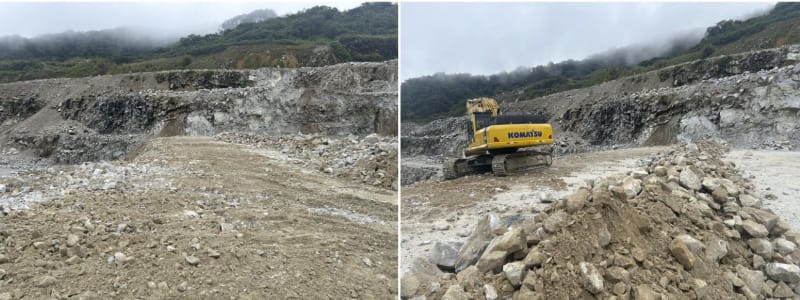
In surface mining, overburden stripping refers to the removal of the material that lies above an ore body or coal seam (Oubah et al., 2024). This overburden composed of soil, rock, and other geological material must be removed to access valuable mineral deposits underneath. The process is integral to mining operations and directly affects their cost and efficiency. The volume of overburden removed compared to the ore extracted is quantified using the stripping ratio. This ratio is a critical economic parameter in mining and is calculated as: Stripping Ratio = Volume of Overburden / Volume of Ore Types of Stripping Ratios Gross Stripping Ratio: The total volume of overburden removed during the mine's life divided by the total volume of ore mined. Incremental Stripping Ratio: The ratio for a specific portion of the mine, often used for short-term planning. Importance of the Stripping Ratio A low stripping ratio is generally more desirable as it indicates that less overburden needs to be removed to access the ore, reducing operational costs. Conversely, a high stripping ratio increases mining costs and requires careful economic evaluation to determine whether the ore body remains profitable to mine. Challenges in Overburden Stripping Environmental Impact: Overburden removal can lead to habitat destruction, increased erosion, and dust generation. Cost Implications: The equipment, fuel, and labor required for stripping constitute a significant portion of the mining budget. Land Reclamation: Post-mining rehabilitation of stripped areas is necessary to mitigate long-term environmental impacts. Conclusion Optimizing the stripping ratio and overburden removal processes is essential for maintaining the economic feasibility of mining projects. Advanced planning, coupled with technologies like photoanalysis and geospatial mapping, can significantly improve the efficiency and environmental sustainability of overburden stripping operations. Blasting waste rock is one of the cost-effective method for removing parent rock in mining. This process involves using controlled explosives to fracture the rock mass, enabling efficient removal of overburden or unmineralized material. It enhances productivity by breaking large volumes of rock quickly, facilitating access to ore deposits while reducing the need for extensive mechanical excavation. Proper blast design minimizes waste and ensures safety.
Sign up to get unlimited content. No credit card needed.