

One to watch from My Country..Check it ou
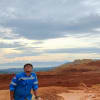
"Why Southeast Sulawesi?" When people hear the name "Southeast Sulawesi", most immediately think of "nickel". Yet, for a geologist, nickel is not the story—it is merely the outcome of a much longer geological history. The true story began tens of millions of years ago, when fragments of ancient oceanic lithosphere were emplaced onto the continental margin during complex tectonic interactions. Today, this ophiolitic belt represents one of the most remarkable geological archives in Southeast Asia. What makes Southeast Sulawesi exceptional is not simply the presence of ultramafic rocks, but the combination of several geological processes: • Obduction of oceanic lithosphere • Extensive serpentinization of mantle peridotites • Long-term tropical chemical weathering • Stable geomorphological evolution • Hydrological and structural controls on laterite development Together, these processes transformed mantle-derived rocks into world-class nickel laterite deposits. However, not every ultramafic body becomes an economic nickel deposit. Ore formation depends on a delicate interaction between lithology, structural architecture, weathering intensity, drainage conditions, topography, groundwater dynamics, and the duration of lateritization. Understanding these relationships remains one of the greatest challenges in economic geology and mineral resource evaluation. For exploration geologists, Southeast Sulawesi provides a natural laboratory to investigate laterite genesis. For resource geologists, it offers invaluable insights into geological domaining, grade continuity, weathering profiles, density variability, and uncertainty in resource estimation. Perhaps the most fascinating perspective is this: -) "The world sees Southeast Sulawesi as a nickel province. A geologist sees an ancient fragment of Earth's oceanic lithosphere, reshaped by millions of years of tropical weathering into one of the planet's most significant lateritic nickel systems." Understanding the geology behind the resource is what transforms data into knowledge—and knowledge into better exploration and resource decisions.

